
Saylor-Beall builds industrial air compressors in St. Johns, Michigan, and has done so for more than a century. They are specialists rather than generalists — in their own words, specialized manufacturers of two stage air compressors for commercial and industrial applications — and they machine the cylinders, blocks, crankshafts, and connecting rods in-house on their own CNC centers.
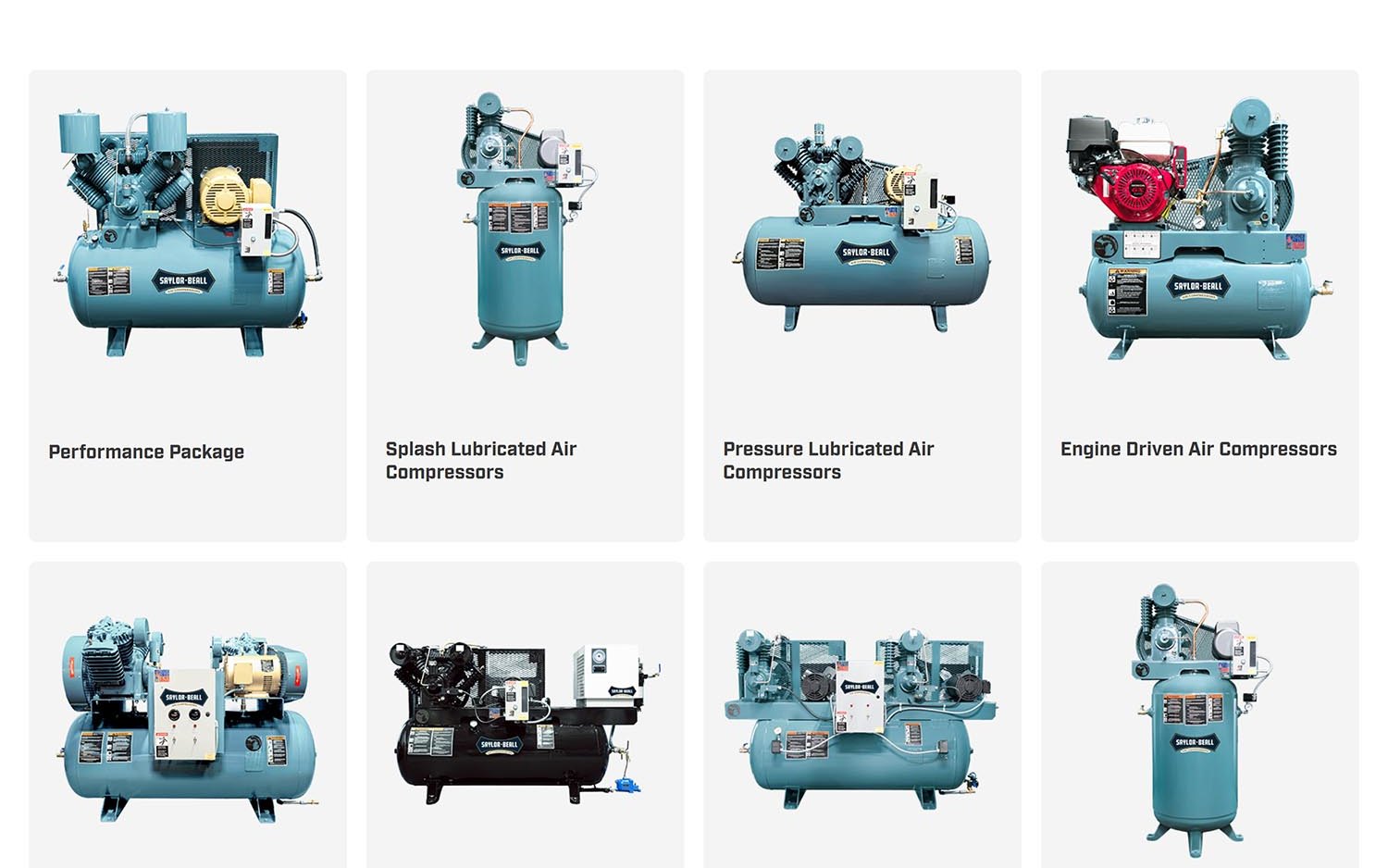
Their catalog runs from splash-lubricated and pressure-lubricated reciprocating units through rotary screw, oil-less, engine-driven, duplex, and climate-control packages, plus air treatment and lubricants. They sell through a network of distributors rather than direct.
That last detail shapes everything about the website. The people reading it are not consumers. They are distributors, plant engineers, and maintenance managers who arrive knowing roughly what they need and want to confirm a model number.
There is a familiar failure mode for manufacturer websites. A designer arrives, finds the product pages dense and unattractive, and cleans them up — which in practice means removing the specification tables, replacing them with lifestyle photography and three benefit bullets, and burying the real numbers in a PDF.
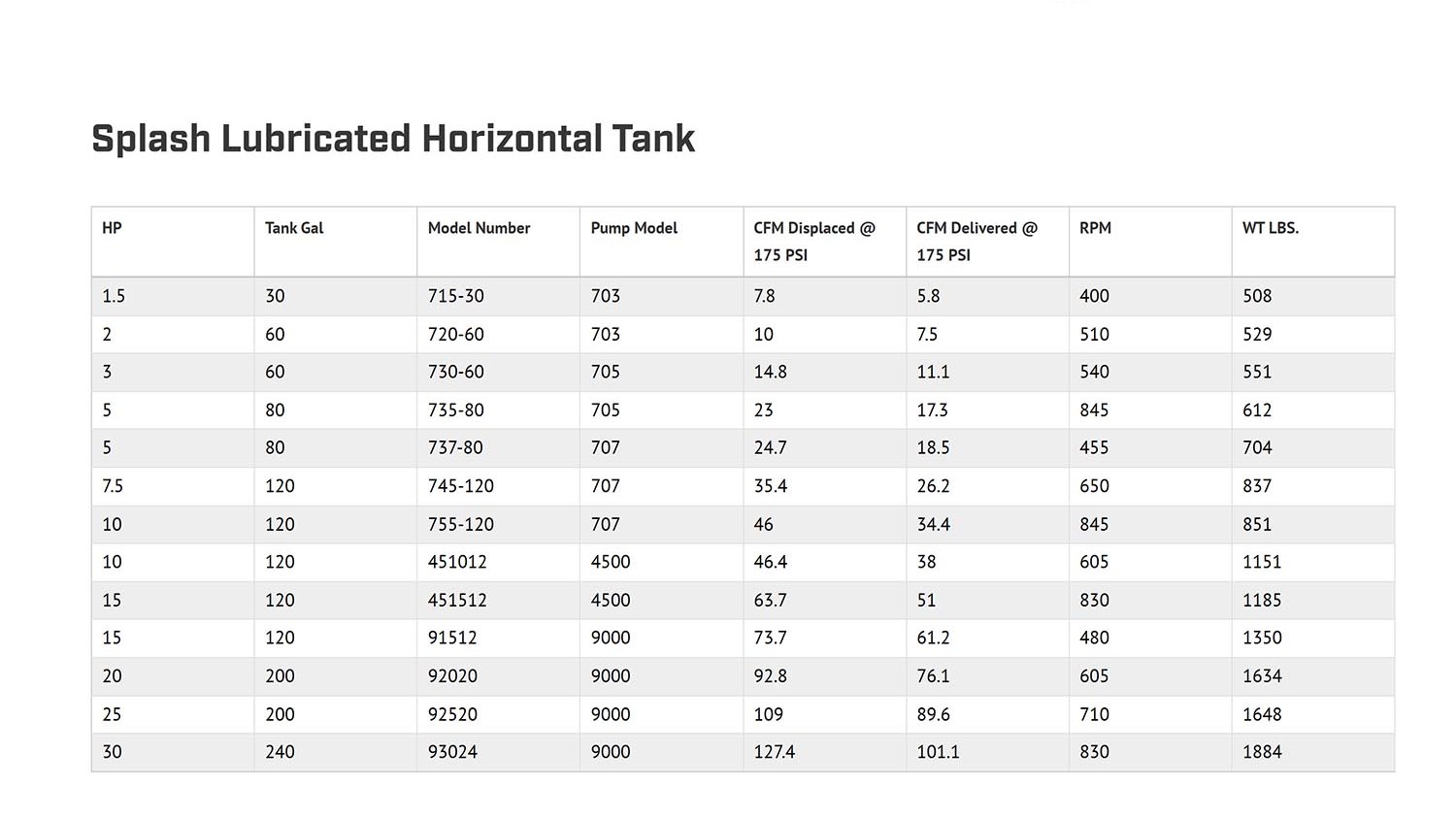
It looks better. It works worse. A distributor pricing a twenty-horsepower unit for a customer does not want to feel inspired. They want horsepower, tank size, model number, pump model, CFM displaced and delivered at pressure, RPM, and weight — on the page, in a table, in the browser.
So the design problem was not how to simplify the catalog. It was how to make a dense technical catalog feel considered and modern without taking a single number off the page.
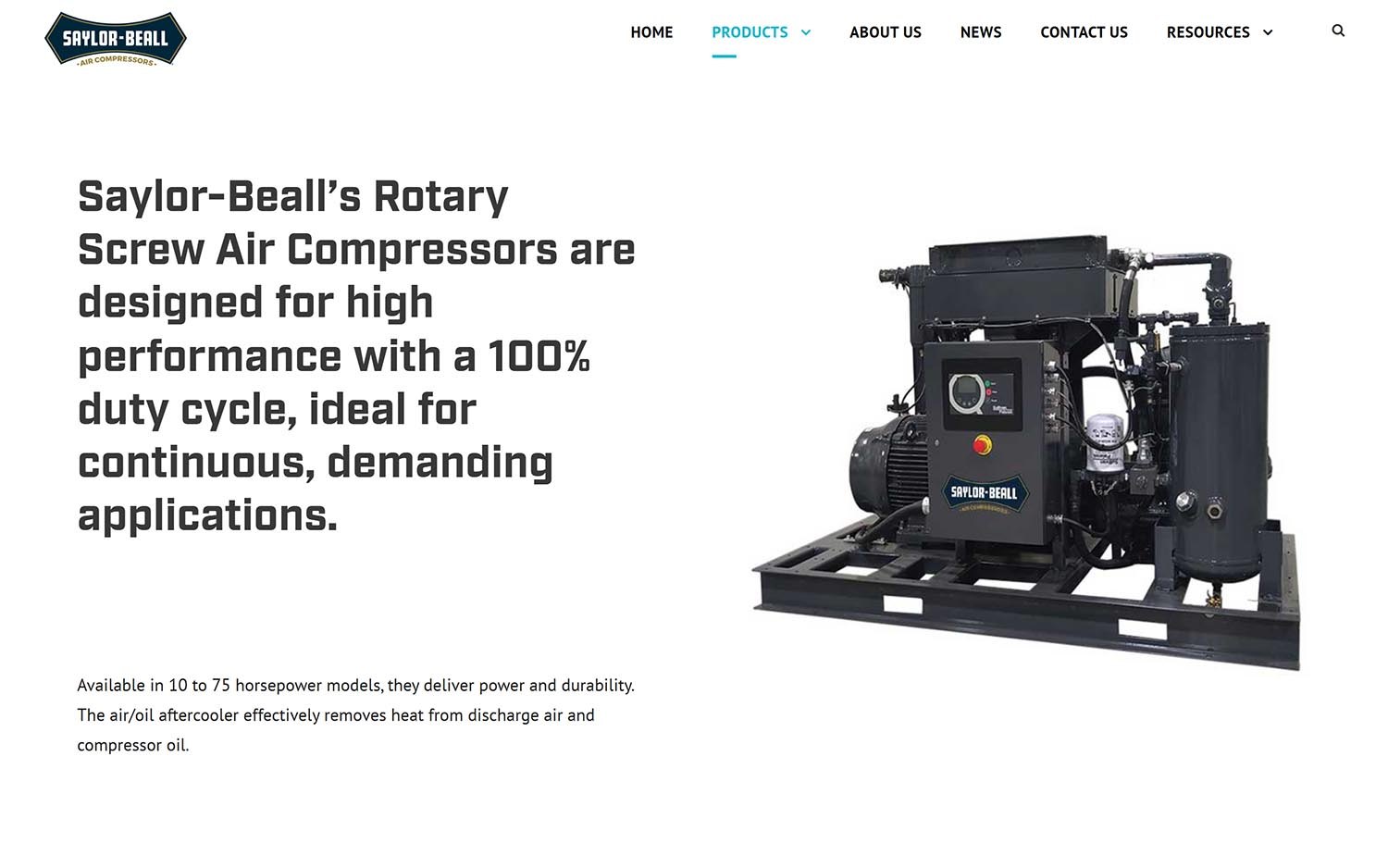
We designed a custom catalog page template for each product family rather than dropping every model into a generic grid. A category opens with a hero and a short, plain explanation of what the family is for and where it fits — and then it gets out of the way and shows the table.
Splash-lubricated units, for instance, carry two full tables — horizontal tank and vertical tank configurations — running the complete model range with every column an engineer expects. The tables are typeset as part of the design rather than pasted in as an afterthought, so they read cleanly on a laptop in an office or on a plant floor.
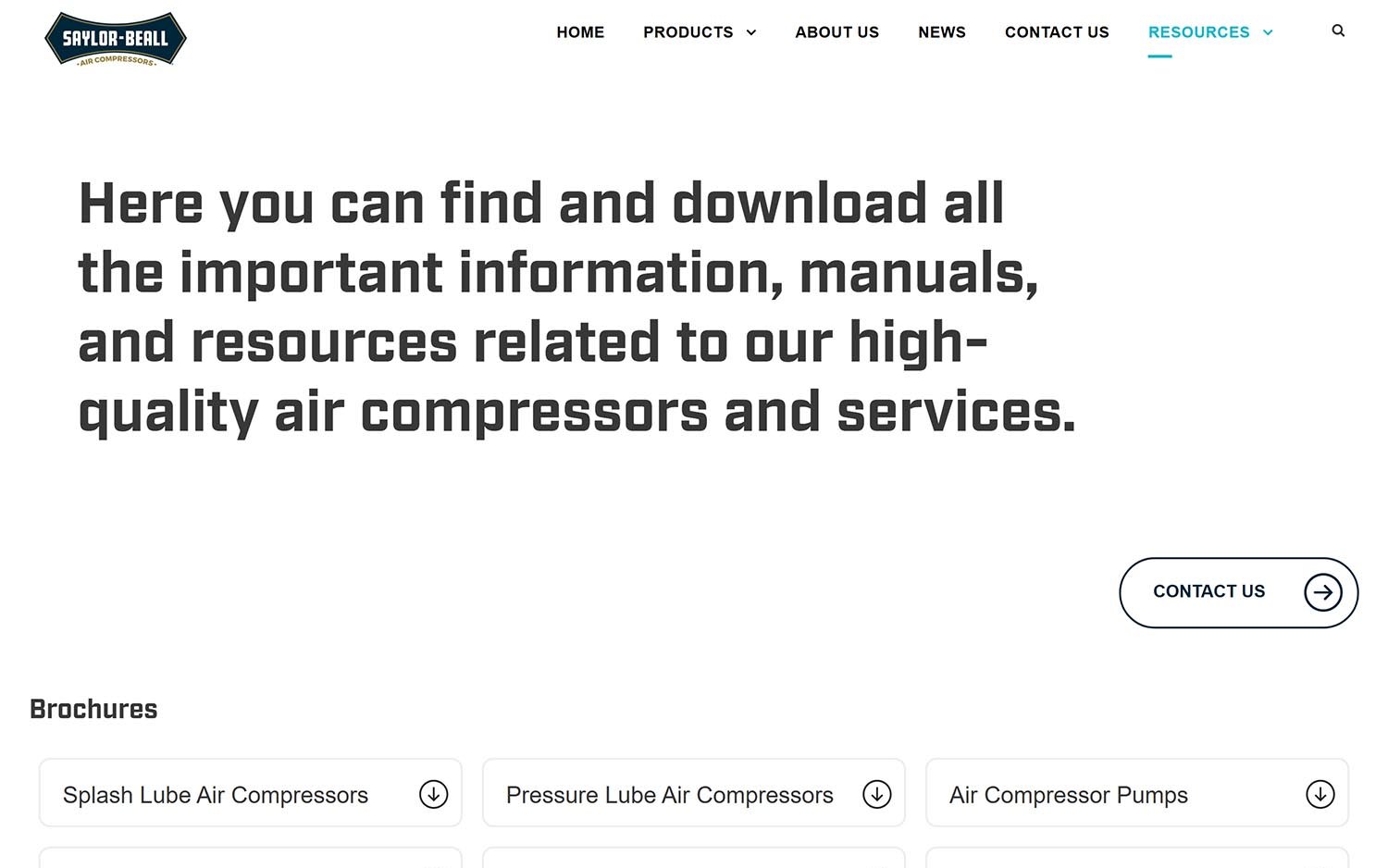
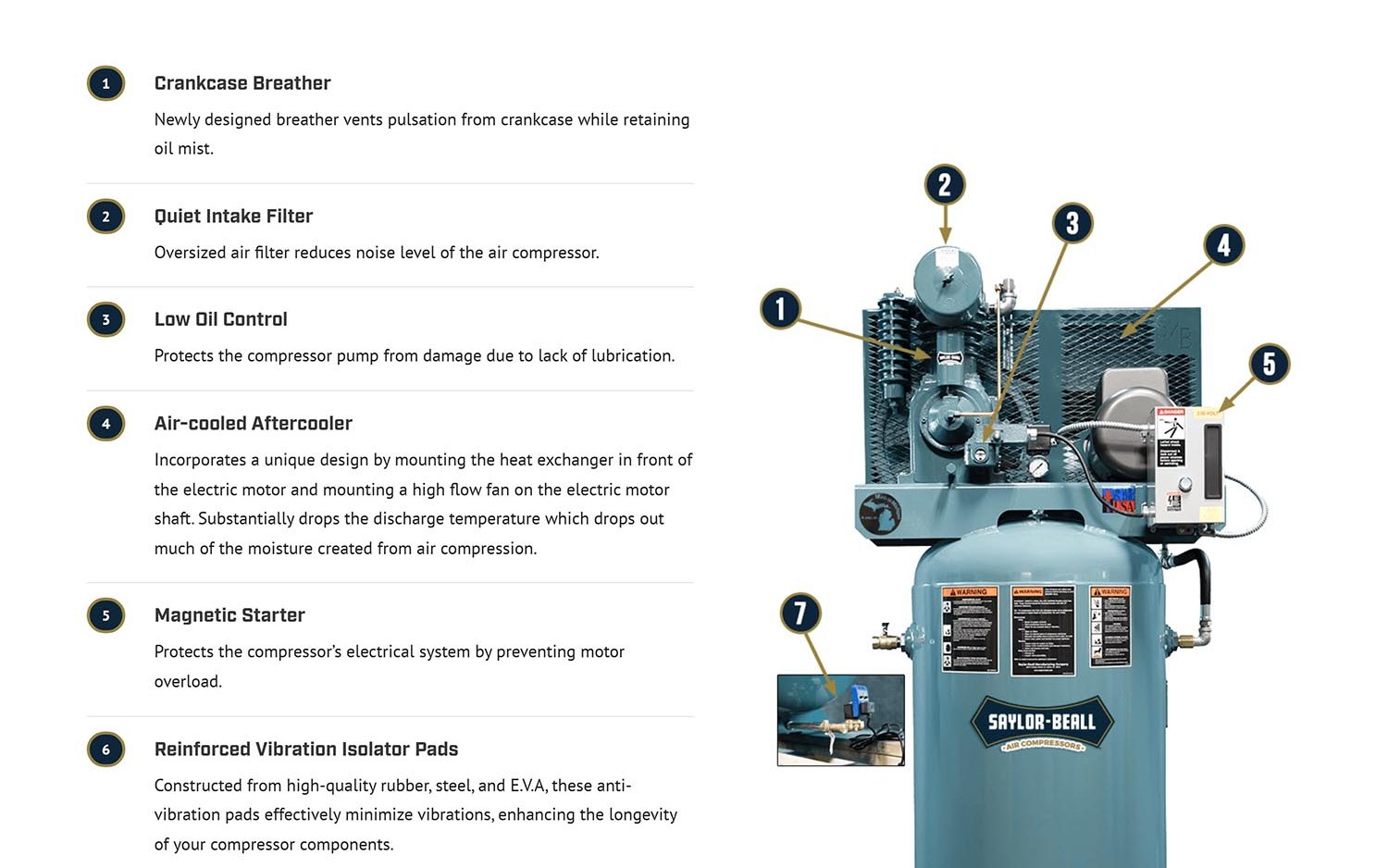
Below the tables, each family lists its optional features and shows real product photography of the actual units. Product literature lives in a dedicated resources area, so a distributor who wants the brochure or the cut sheet can get the PDF — but never has to open one just to find a basic specification.
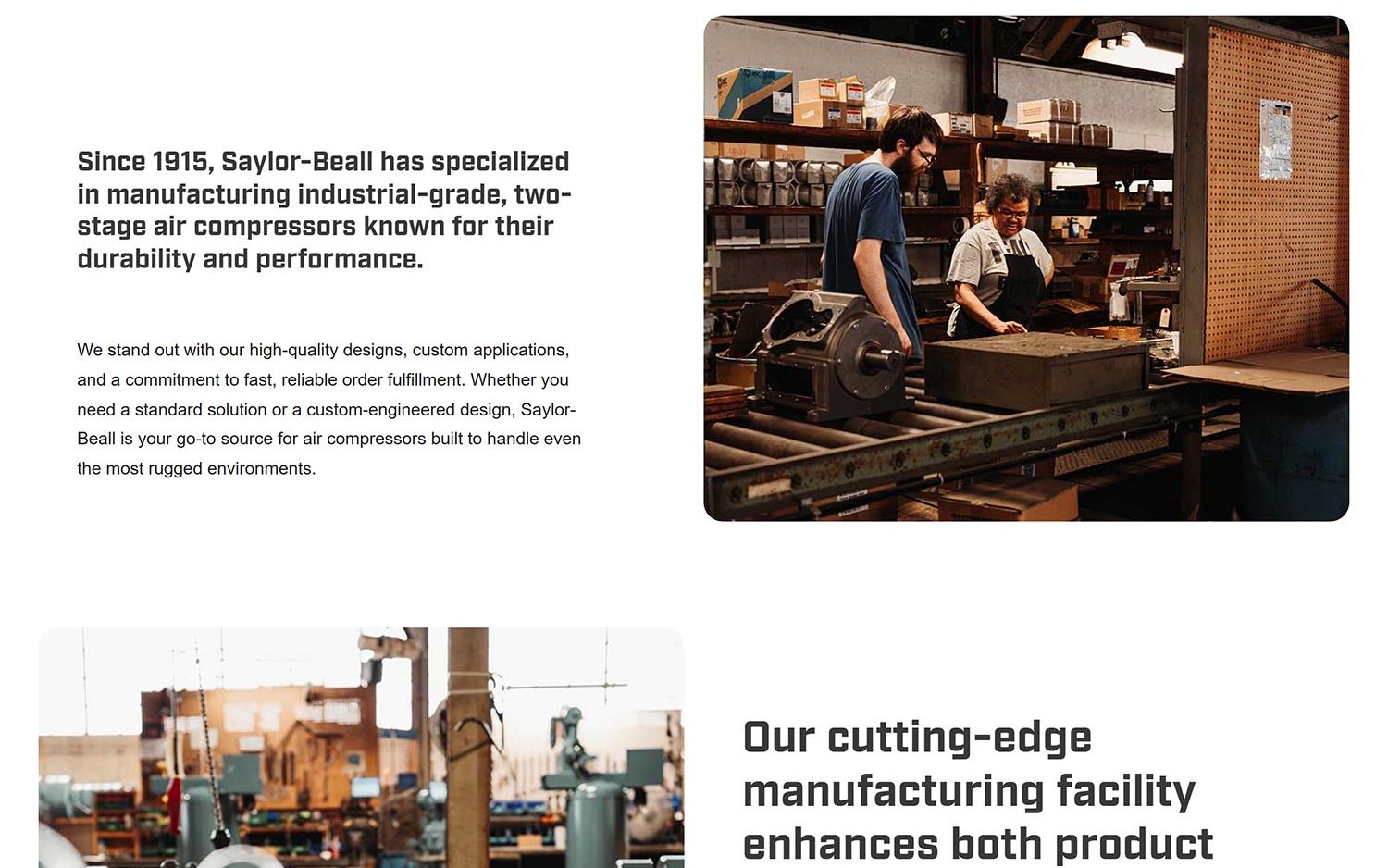
A company that has been manufacturing since 1915 has an enormous asset most manufacturers would kill for, and it is usually buried on an About page nobody reads. We brought it forward — the in-house machining, the American manufacturing, the distributor network, the longevity — and used it as the frame the catalog sits inside.
We also built a resources hub that pulls the scattered material into one place: brochures, cut sheets, drawings, manuals, FAQ, and video. And a news section that mixes company updates with applied case studies, so the site has somewhere to grow that doesn’t require redesigning a product page.