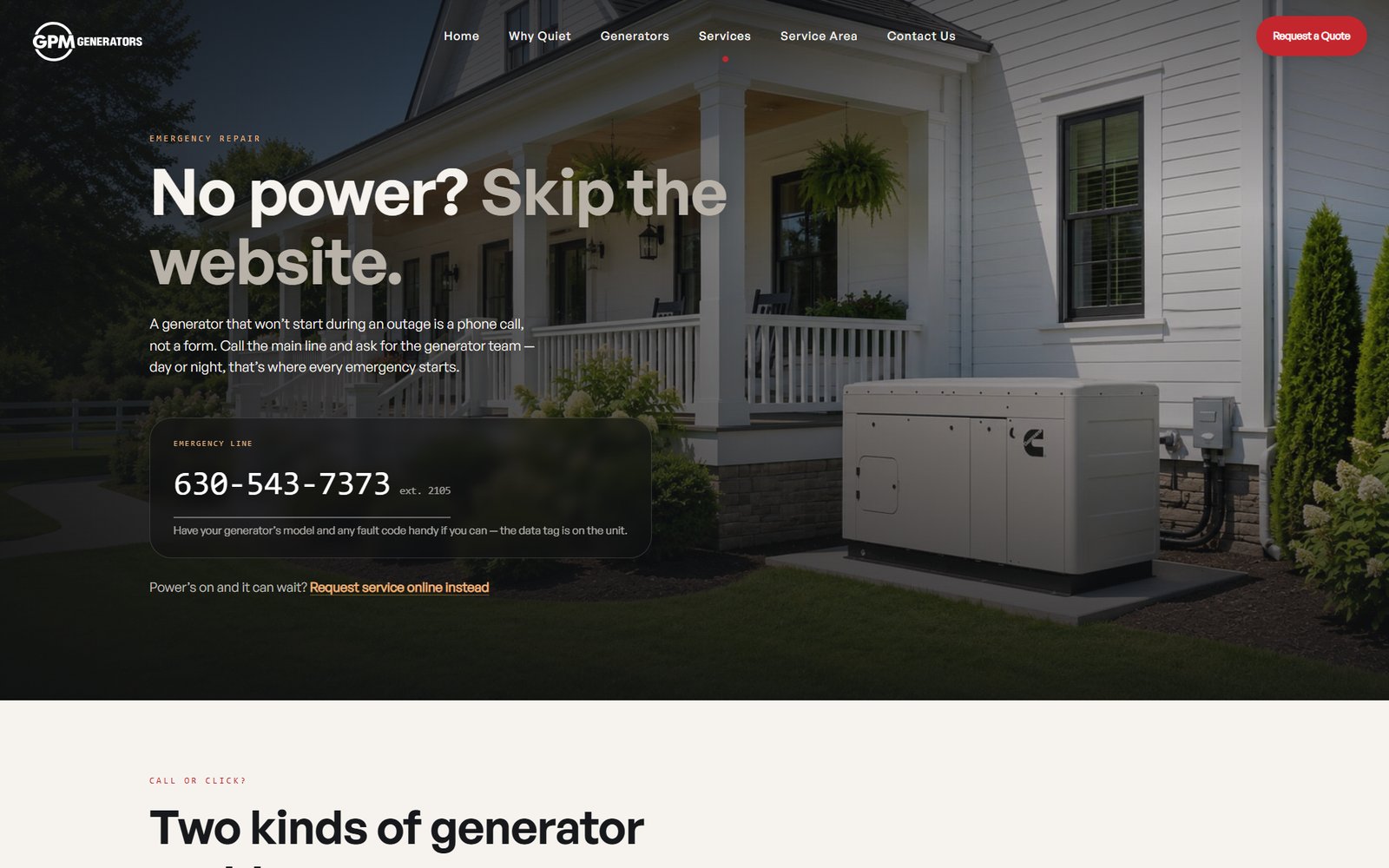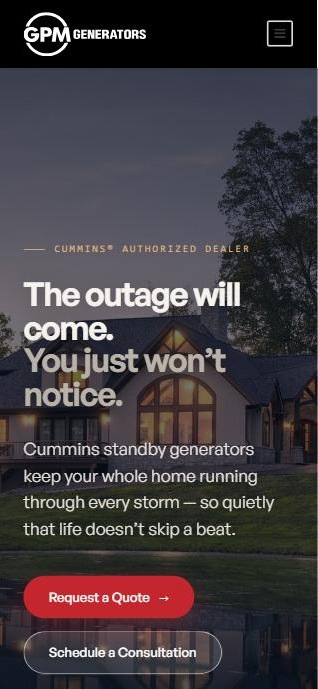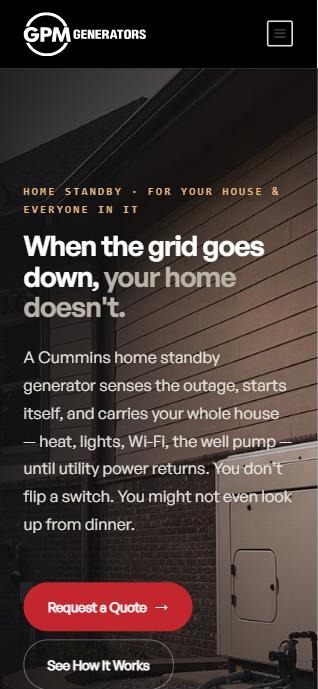

GPM Generators is a Cummins authorized dealer — selling, installing, servicing, and remotely monitoring standby generators for homes, small businesses, and commercial sites, with emergency service around the clock.
This is the third website we have built for them. Each one has come at a different stage of the business, and each one has asked for more than the last. The first two did their jobs. This one was built for a company that has outgrown both.
Search for standby generators and the results blur together: a photo of a beige box beside a house, a storm, a badge, a phone number. Reliability, power, peace of mind, financing. All true, all identical, all forgettable.
The category has a real differentiator sitting in plain sight and almost nobody leads with it. Modern standby units are quiet — close to conversational volume, nowhere near the jobsite roar people picture. For a homeowner weighing a generator against a neighbour’s opinion of one, that is the objection, and it goes unanswered on nearly every competitor site.
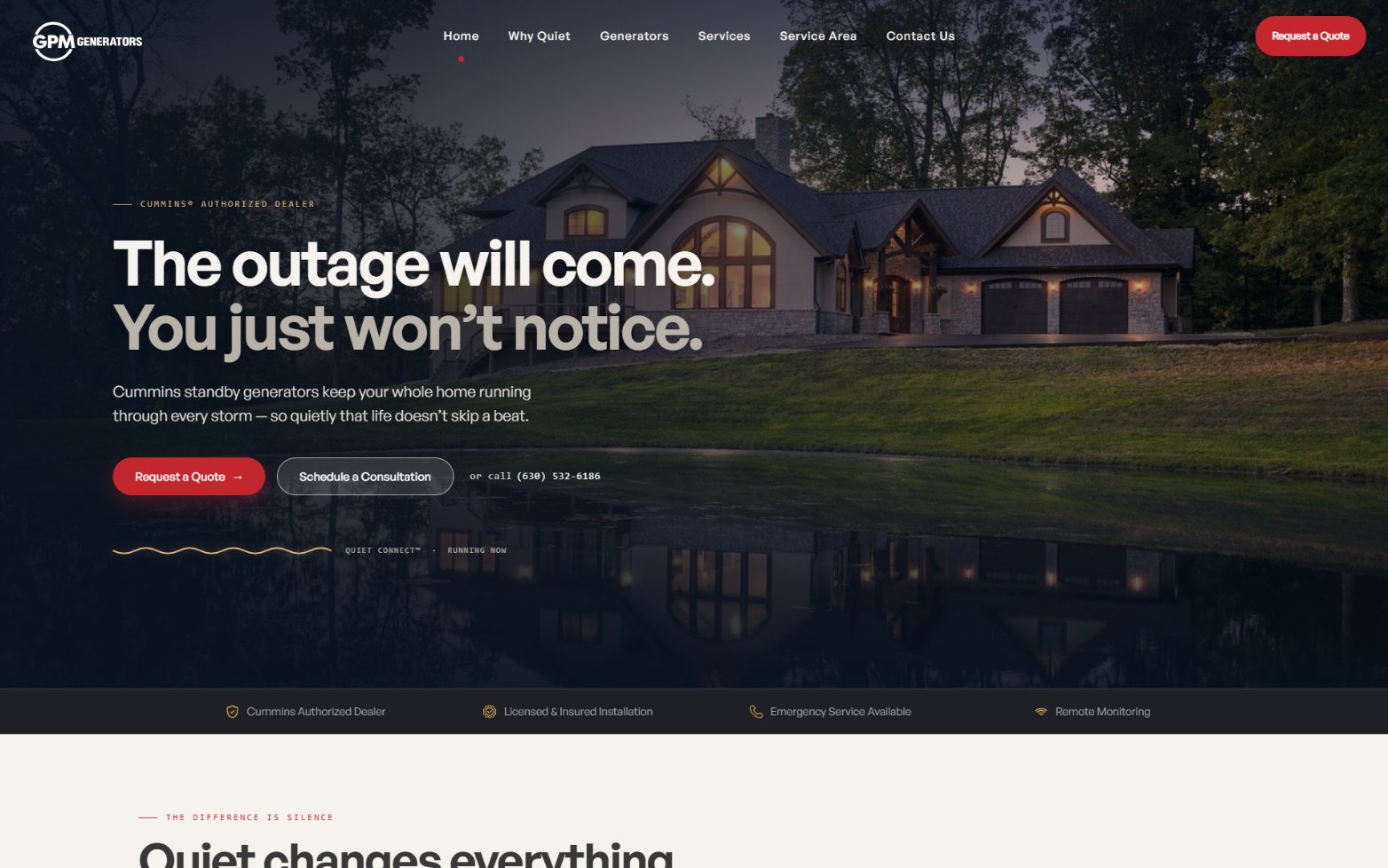
So we built the site around silence.
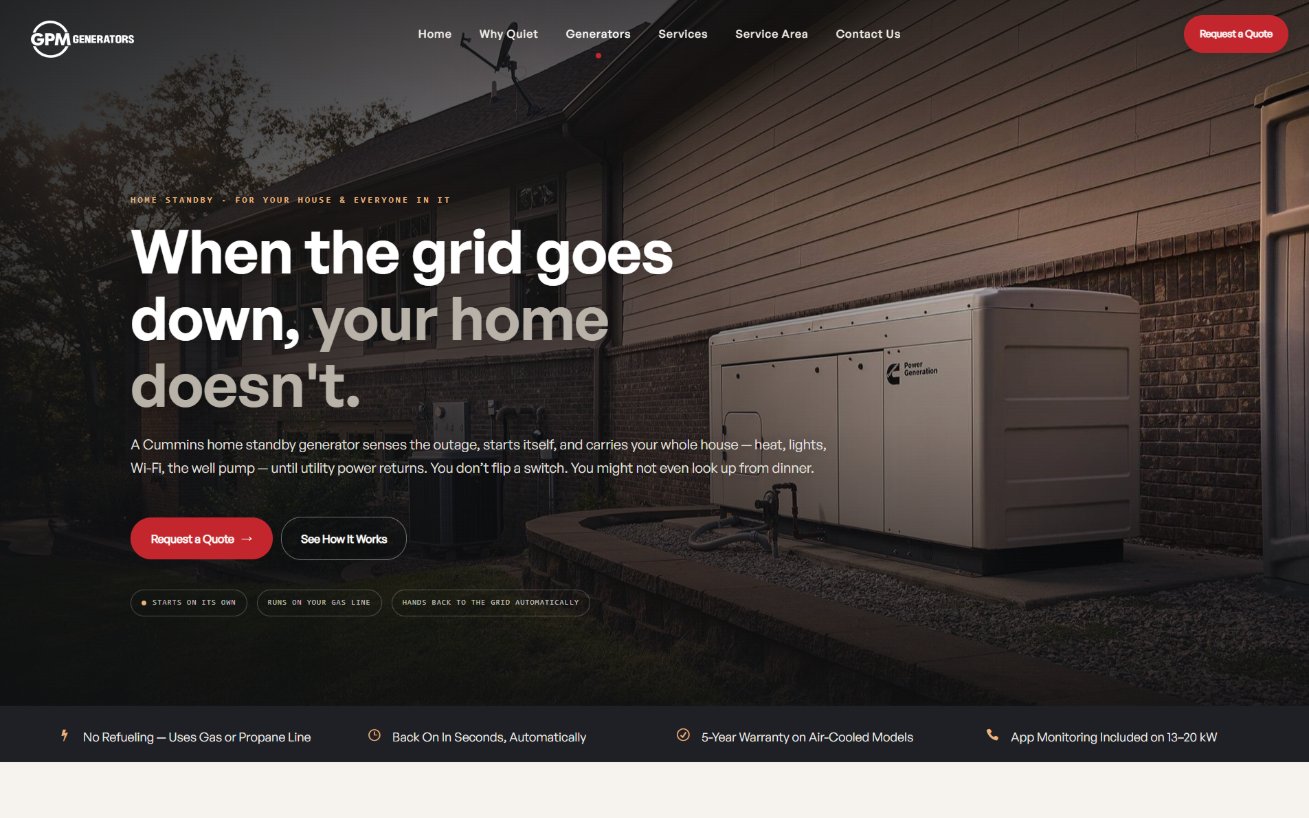
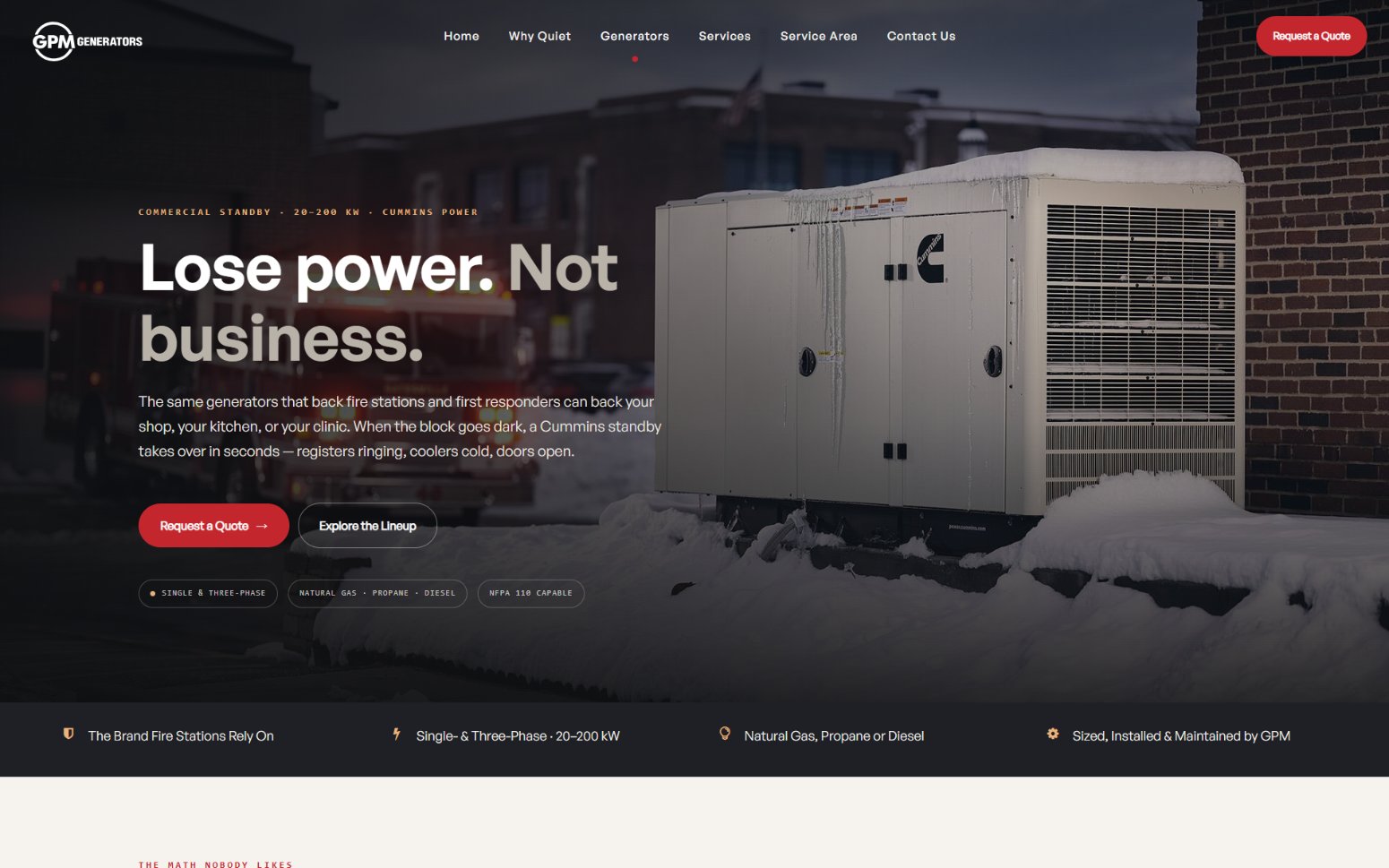
That headline runs across the homepage, and the whole site follows from it. Rather than claim quietness in a bullet point, we made it measurable — a sound comparison that places a running generator against sounds people already have a feel for, so the number lands without needing to be explained.
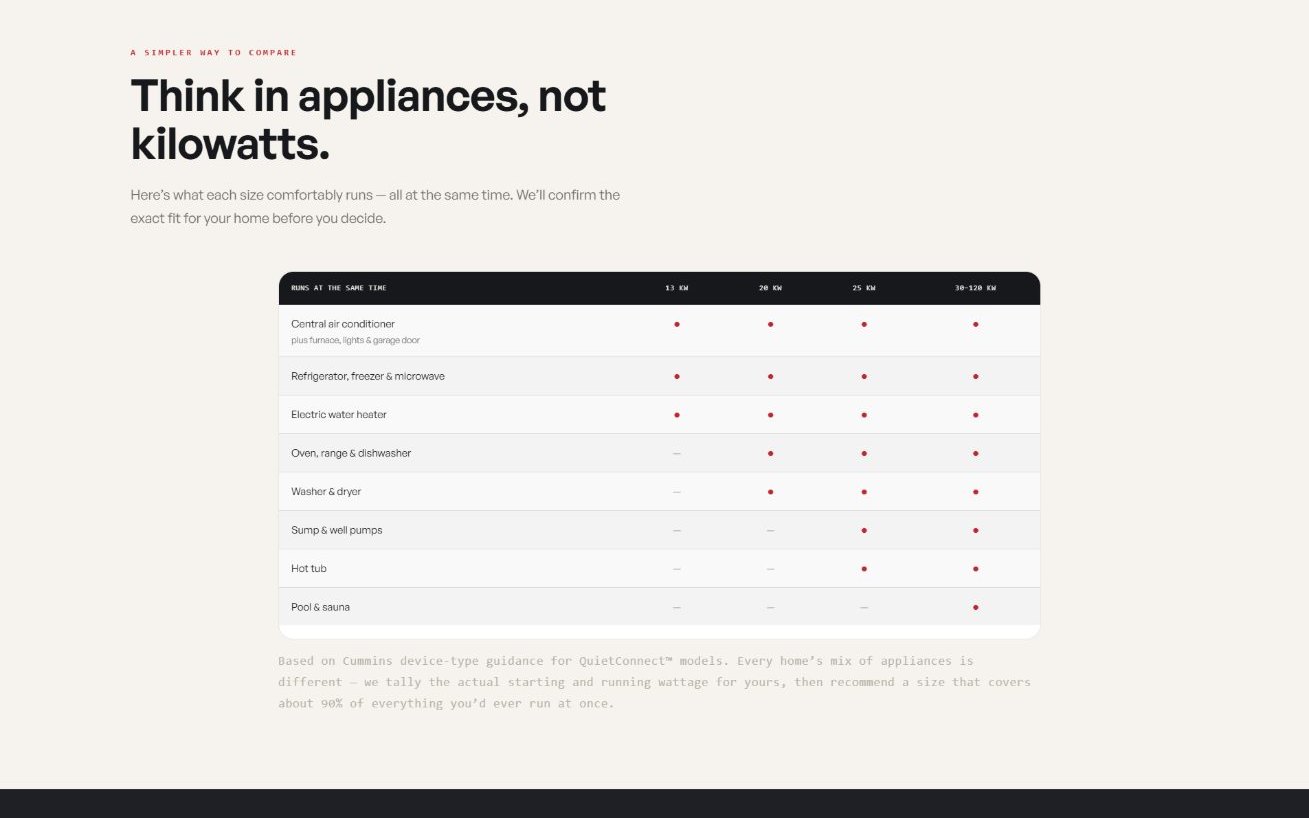
From there the site is built on plain language over specification-speak. The residential page tells homeowners to think in appliances, not kilowatts and maps capacity to what actually keeps running — the furnace, the fridge, the well pump, the CPAP. The small business page opens on the arithmetic an owner already knows: an hour of dark costs more than a generator.
Underneath the plain language, the technical depth is all there for the people who want it: air-cooled and liquid-cooled ranges, gas and diesel and agricultural standby, transfer switch series, inspection and code compliance, and full specification tables across the portable lineup.
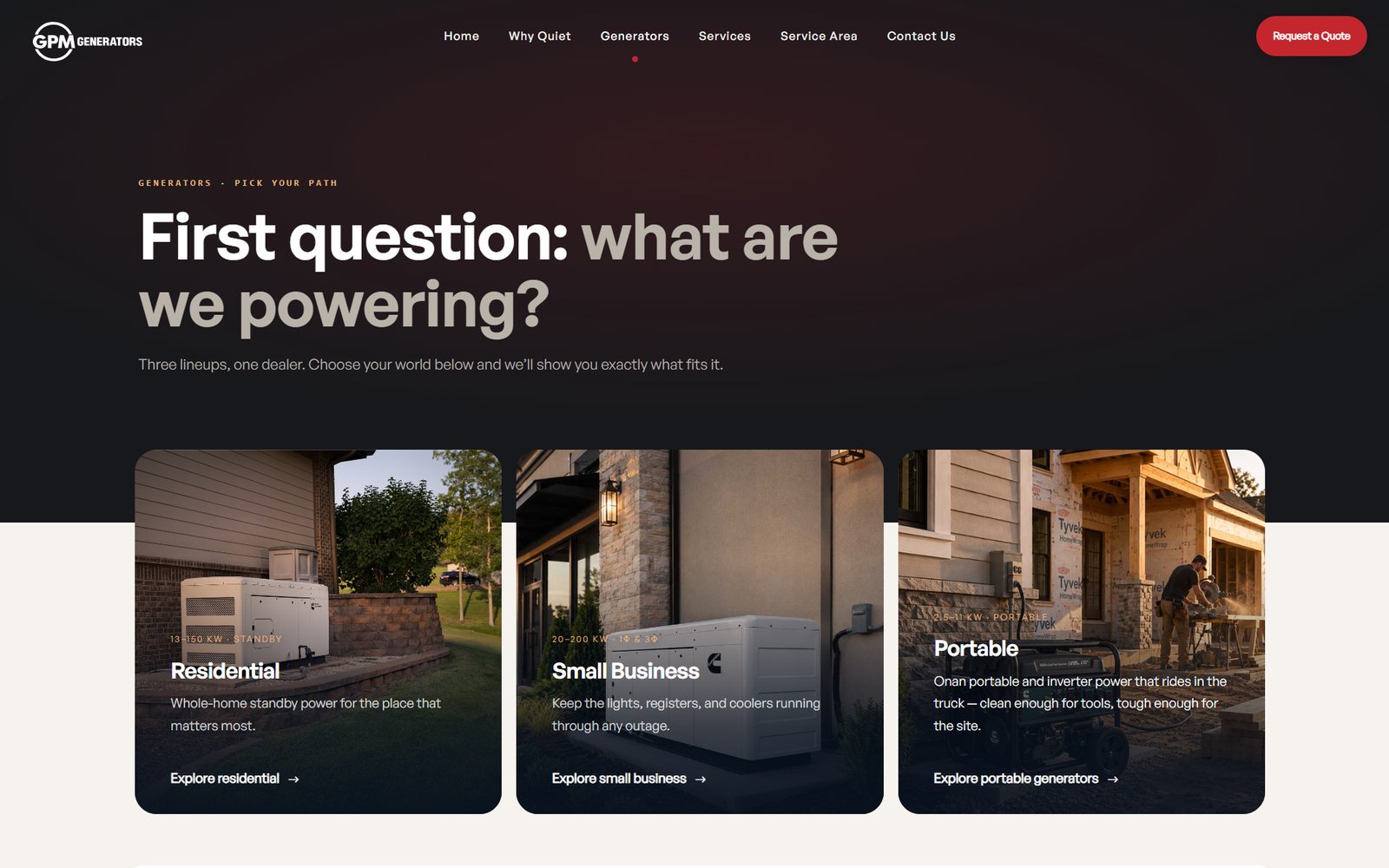
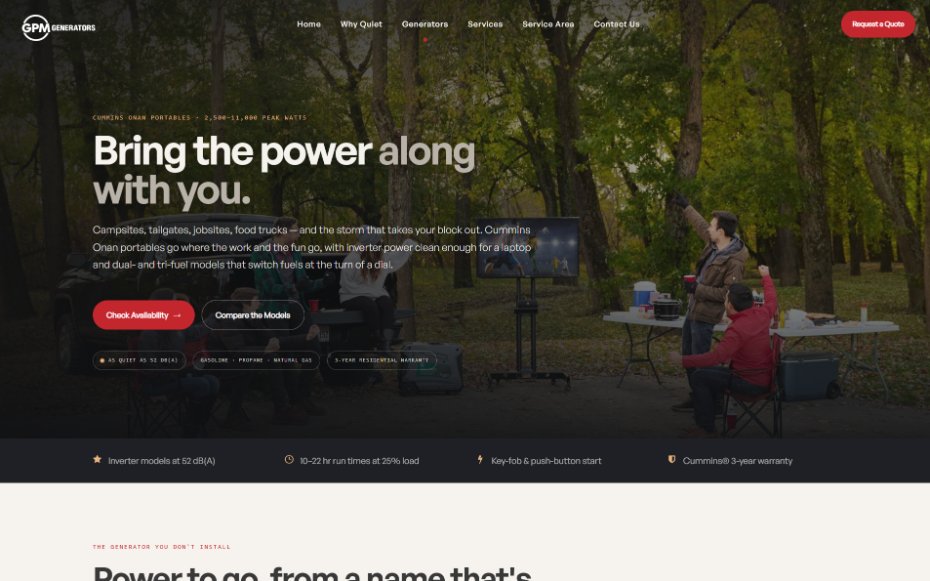
This site was delivered in phases rather than held back for one launch. Phase one established the design system and the product story — the homepage, the generator lineup, and the residential, small business, and portable ranges.
The service side followed: installation, maintenance, emergency repair, and remote monitoring, each with its own page rather than a shared list, because those are four different buying decisions. Then the service area and the conversion paths — request a quote, schedule a consultation, and request maintenance as three distinct flows rather than one generic contact form. Both phases are now built, and the site is ready to launch.
Next comes custom functionality: the kind of sizing, scheduling, and service-management tooling that turns a website into part of how the business runs. Staging it this way meant GPM got value from the work as it landed, and each phase was designed knowing what was coming after it.