
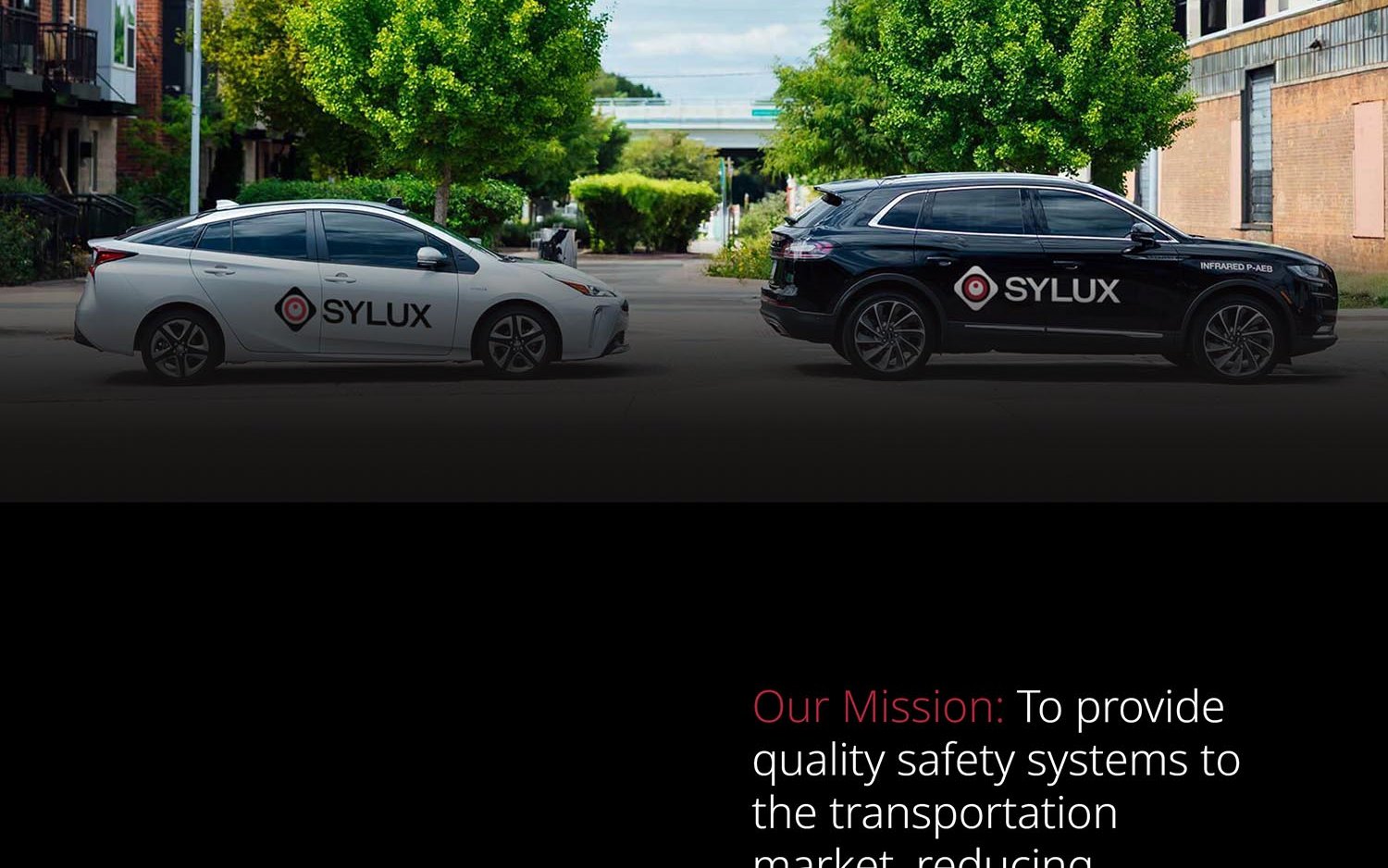
Sylux builds automotive-grade infrared cameras and the AI perception software that reads them — technology that detects pedestrians, cyclists, and obstacles in conditions where conventional cameras struggle: darkness, fog, glare, low contrast. It is a US automotive safety organization powered by Compal, one of the largest electronics manufacturers in the world.
Their platform pairs a perception stack with a tiered range of camera and software packages, plus a standalone infrared sensor for integrators. The engineering heritage behind it runs back through decades of defense infrared work and into the first production automotive night vision systems.
All of that existed. What did not exist was a website.
Sylux was going to an international trade show. Booth booked, materials in production, meetings scheduled with people who would leave the booth, pull out a phone, and look the company up.
What they had at that moment was a single page on the parent company’s corporate site — enough to prove the brand existed, nowhere near enough to carry a conversation with a tier-one buyer or an OEM engineer. A visitor could not read the product range, understand the technology, or find a way to make contact.
The show was three weeks out. That was the entire brief: a real site, standing on its own domain, before the doors opened.
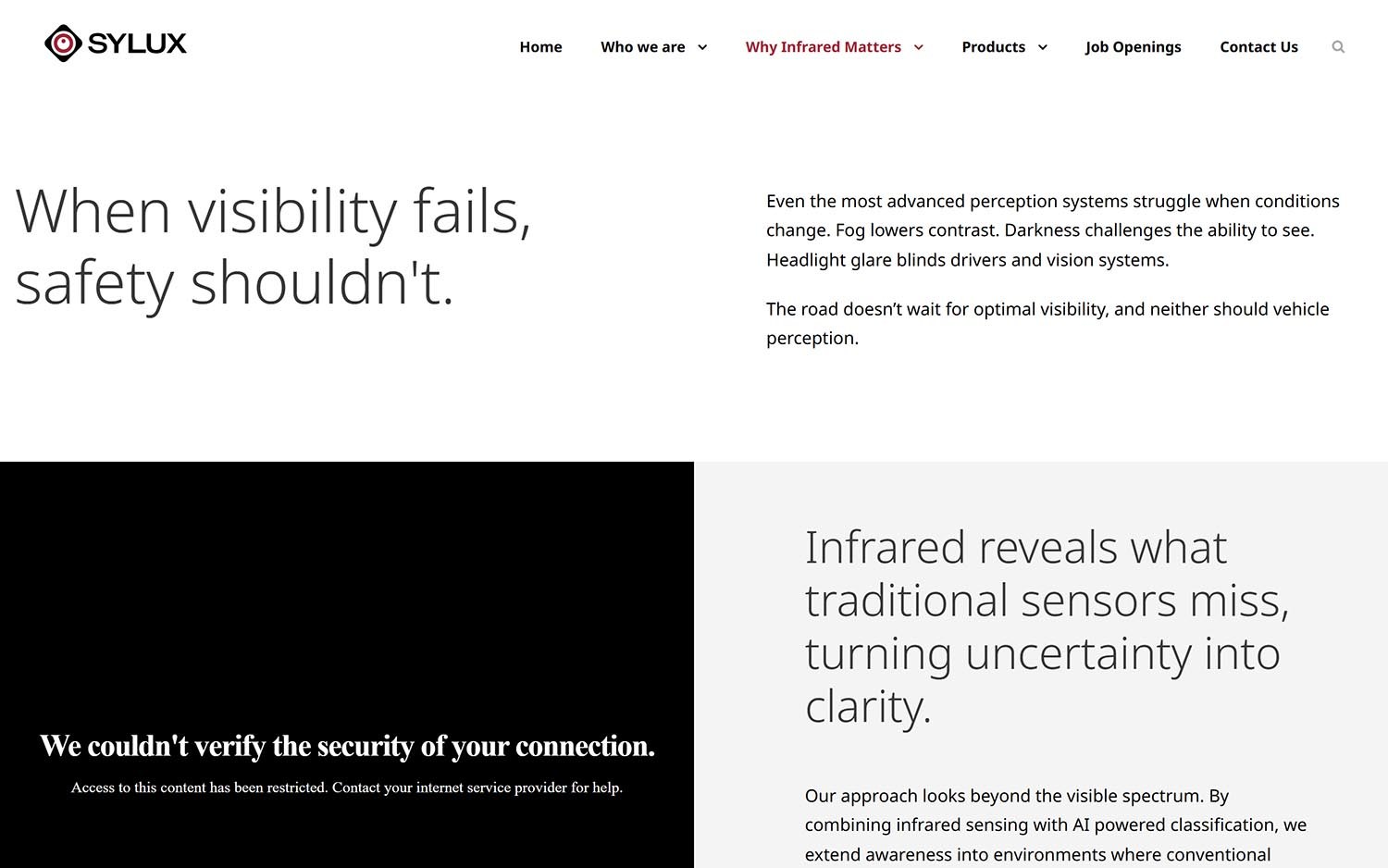
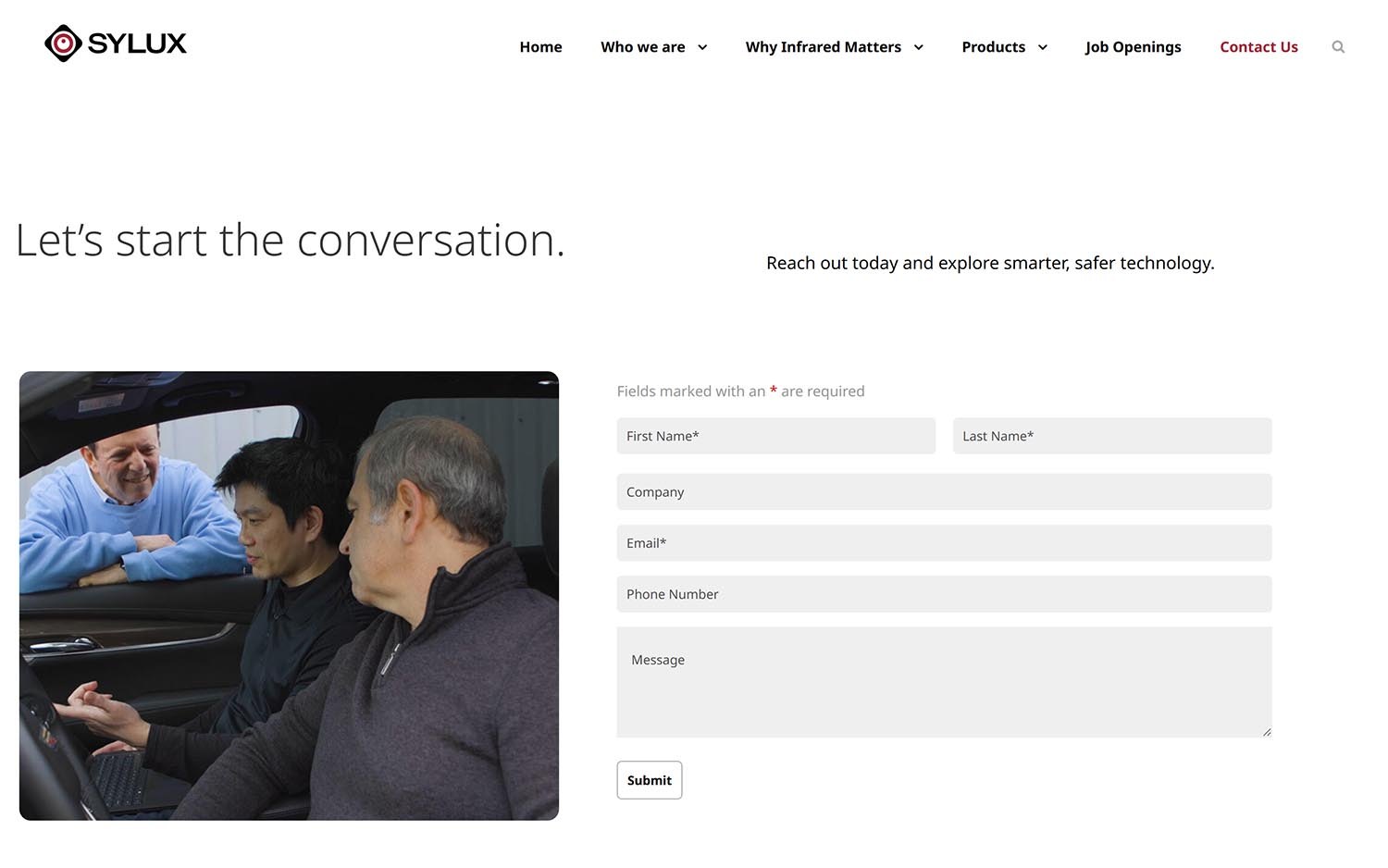
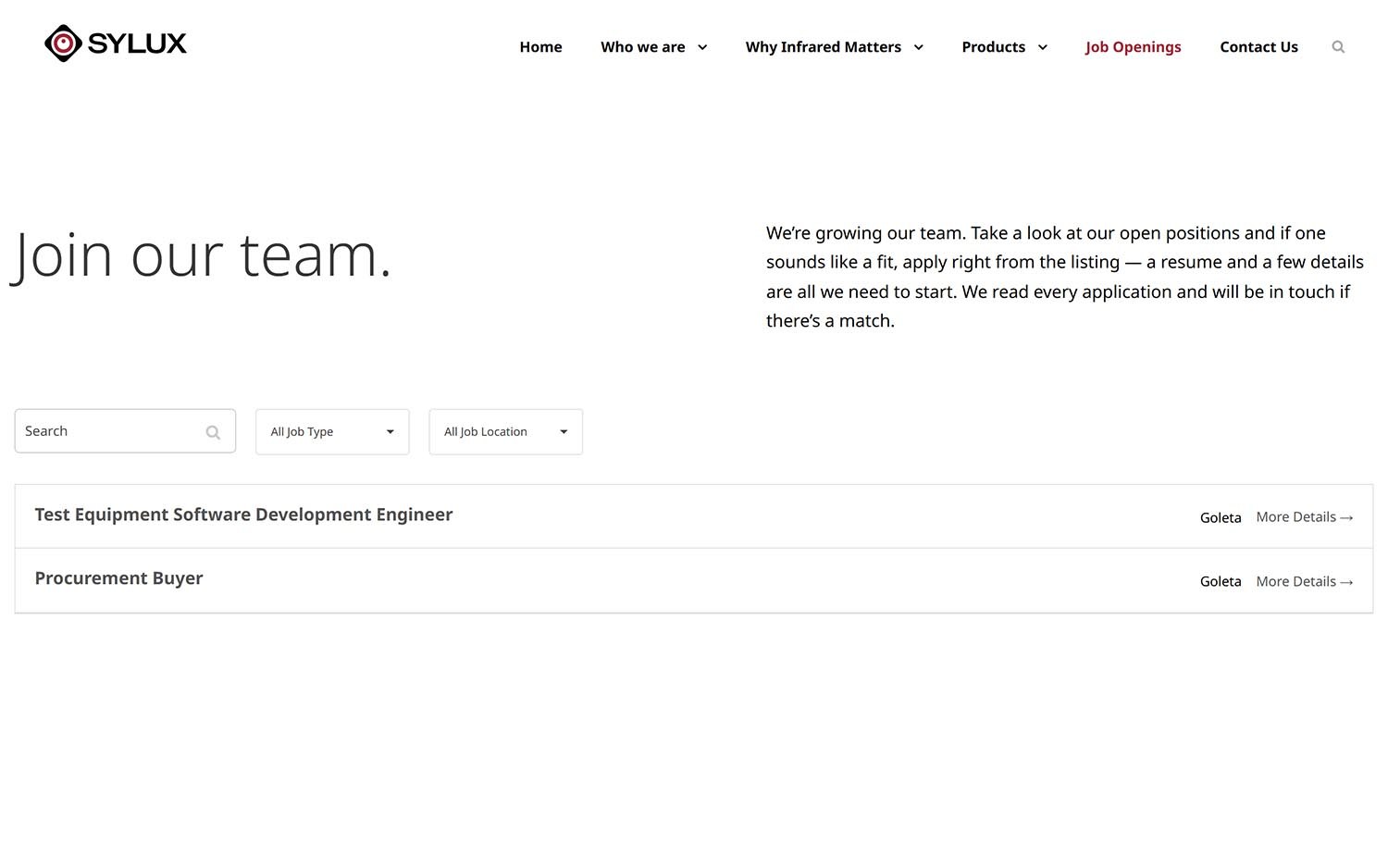
Three weeks does not leave room for exploration. It leaves room for decisions. We scoped the site to what a trade show visitor actually needs and refused everything else: who the company is, why infrared matters, what the products are, and how to get in touch — plus a newsroom and careers, because a company announcing itself needs somewhere to announce things.
The product range got individual pages rather than a single comparison table, so each tier could carry its own positioning and specifications. The technology explanation got its own page, because for a sensing company the argument for the sensing modality is the sales pitch — infrared reveals what conventional sensors miss.
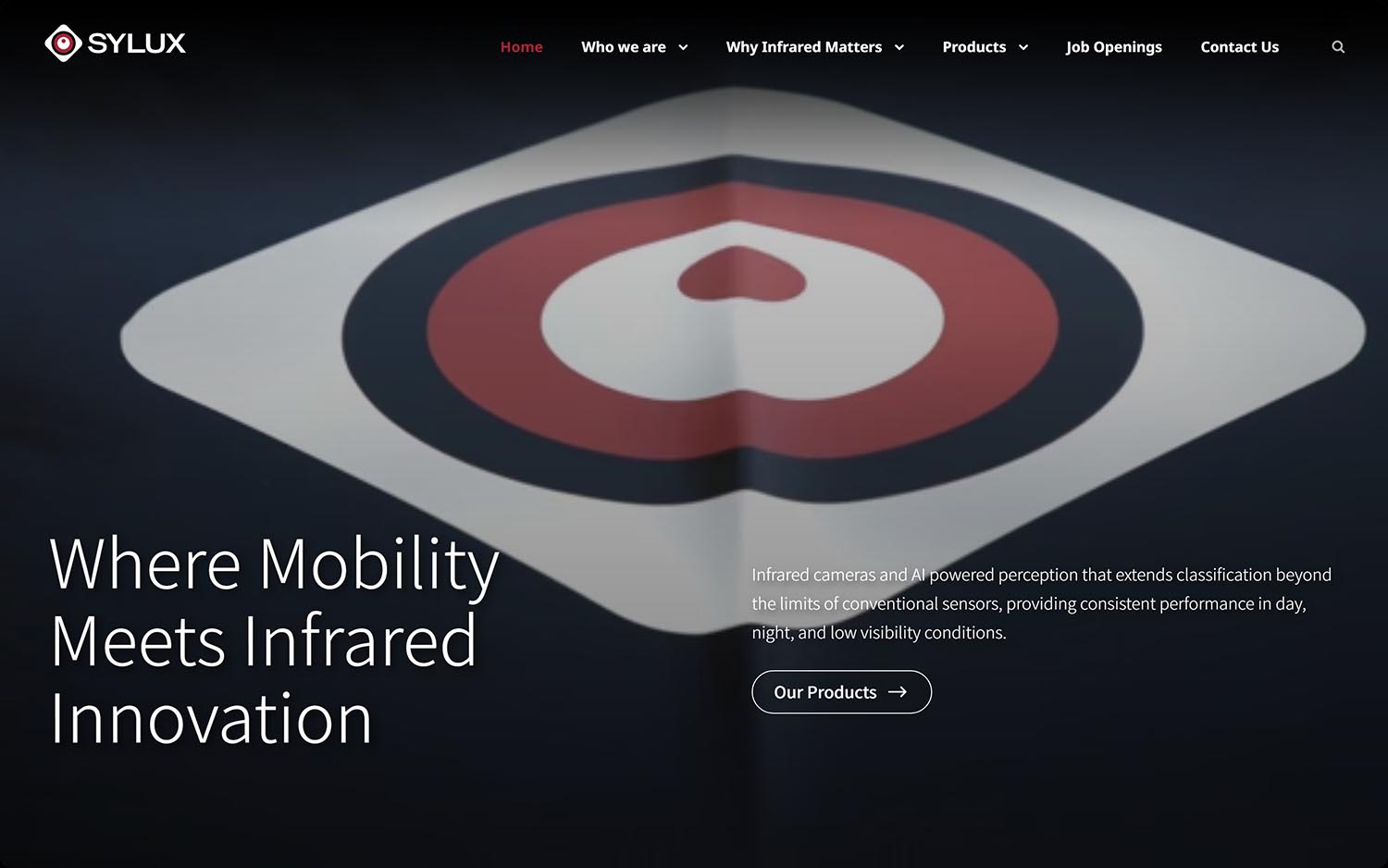
The visual treatment leans on the subject matter. Dark grounds, thermal imagery, and the kind of restraint an automotive engineering audience reads as competence. Nothing on the site is decorative for its own sake, which is partly a design position and partly what three weeks buys you.
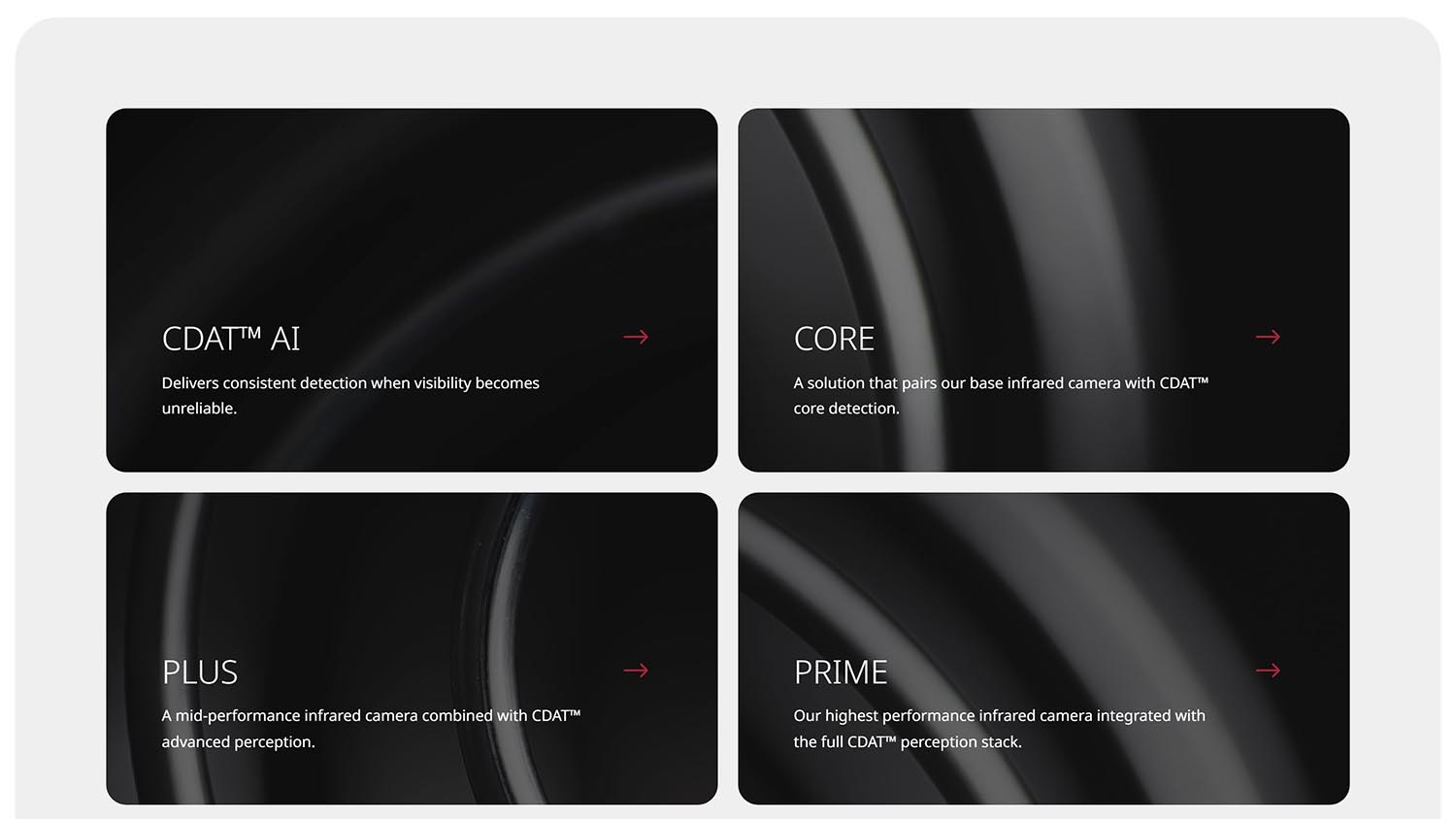
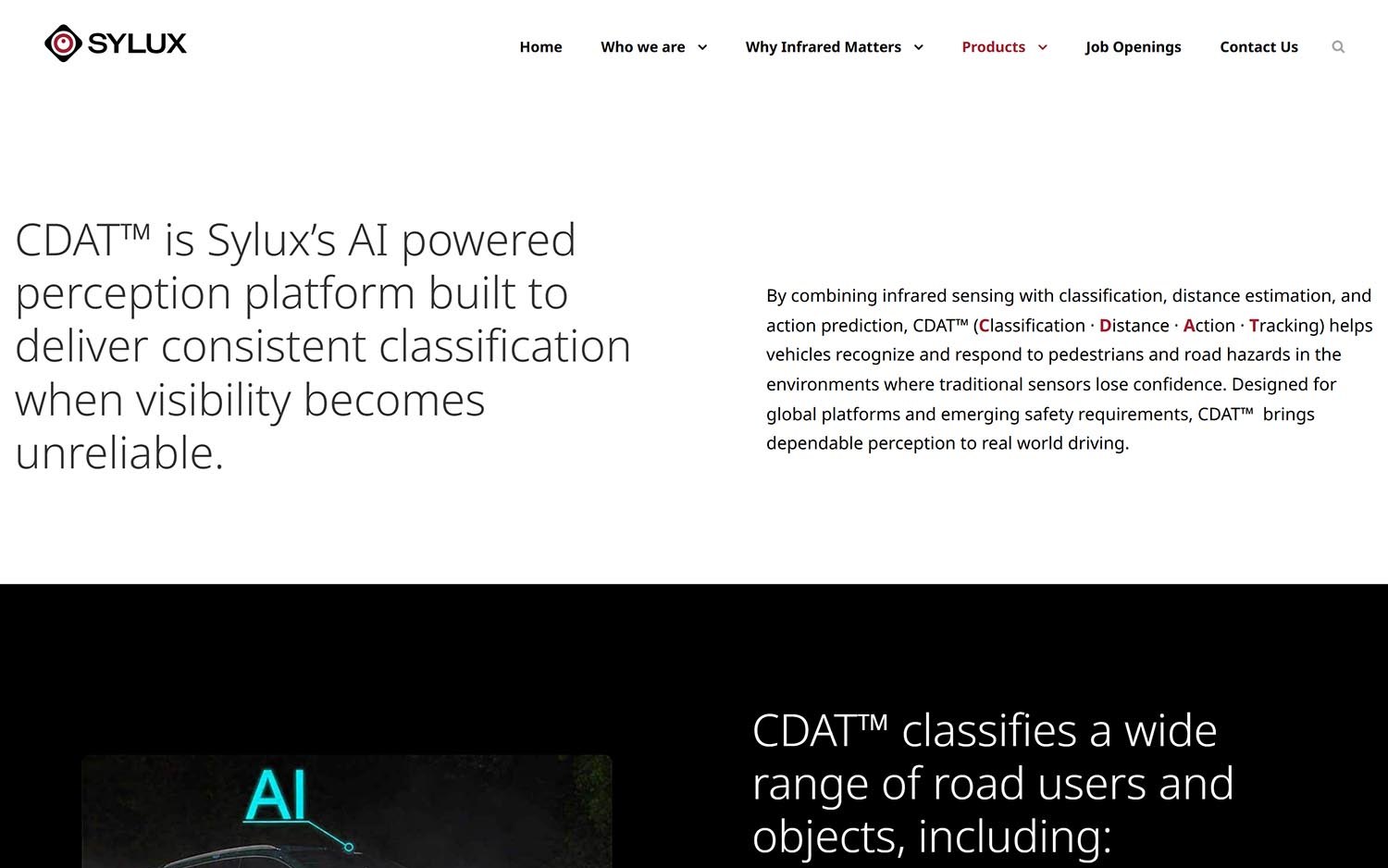
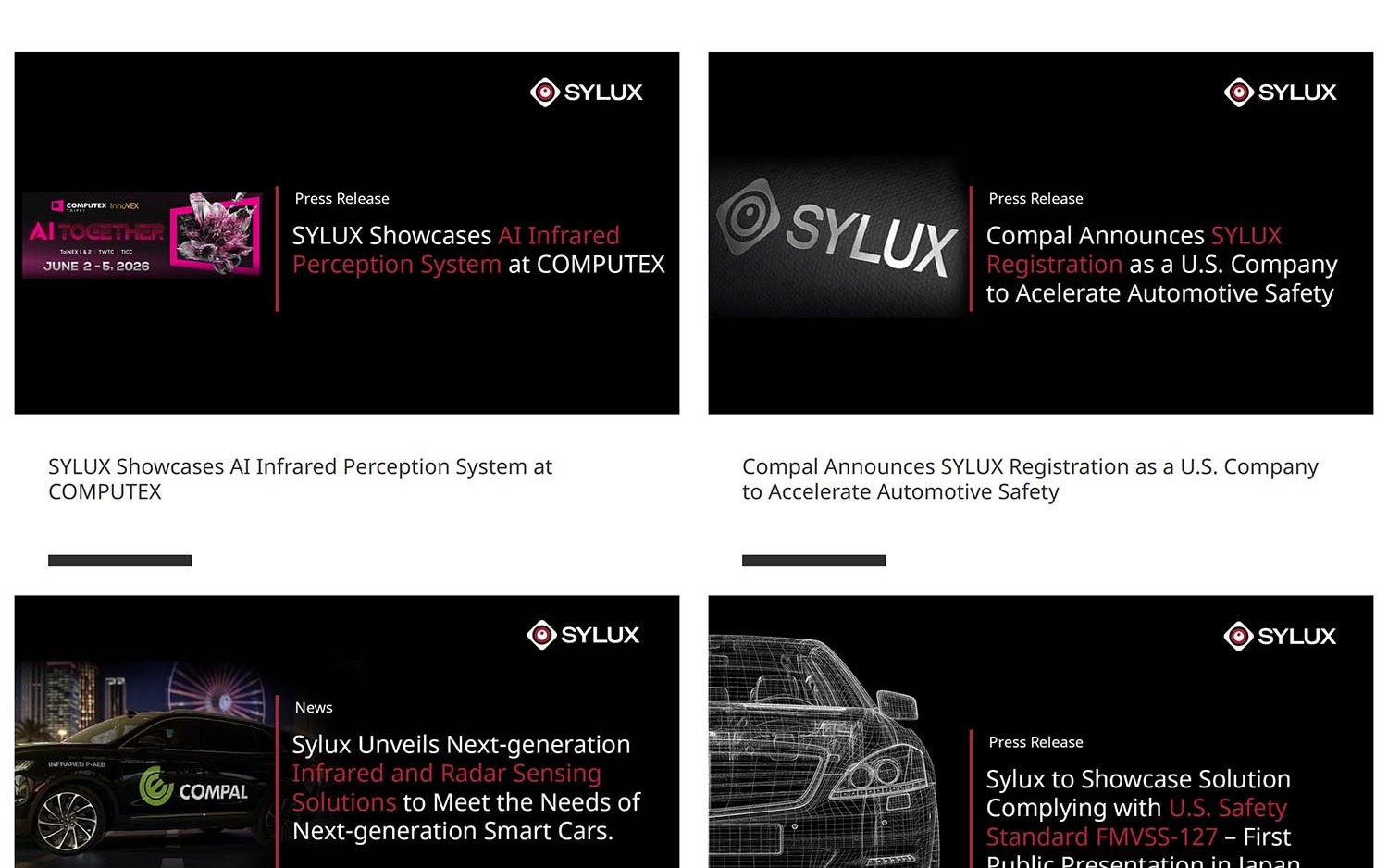
The site launched ahead of the show. Sylux walked into an international exhibition with a domain of their own, a product range a visitor could actually read, and a newsroom that has been carrying announcements since.
The gap between what the company was and what its web presence suggested closed in three weeks — which, for a business whose whole proposition is being seen clearly, felt like the right outcome.