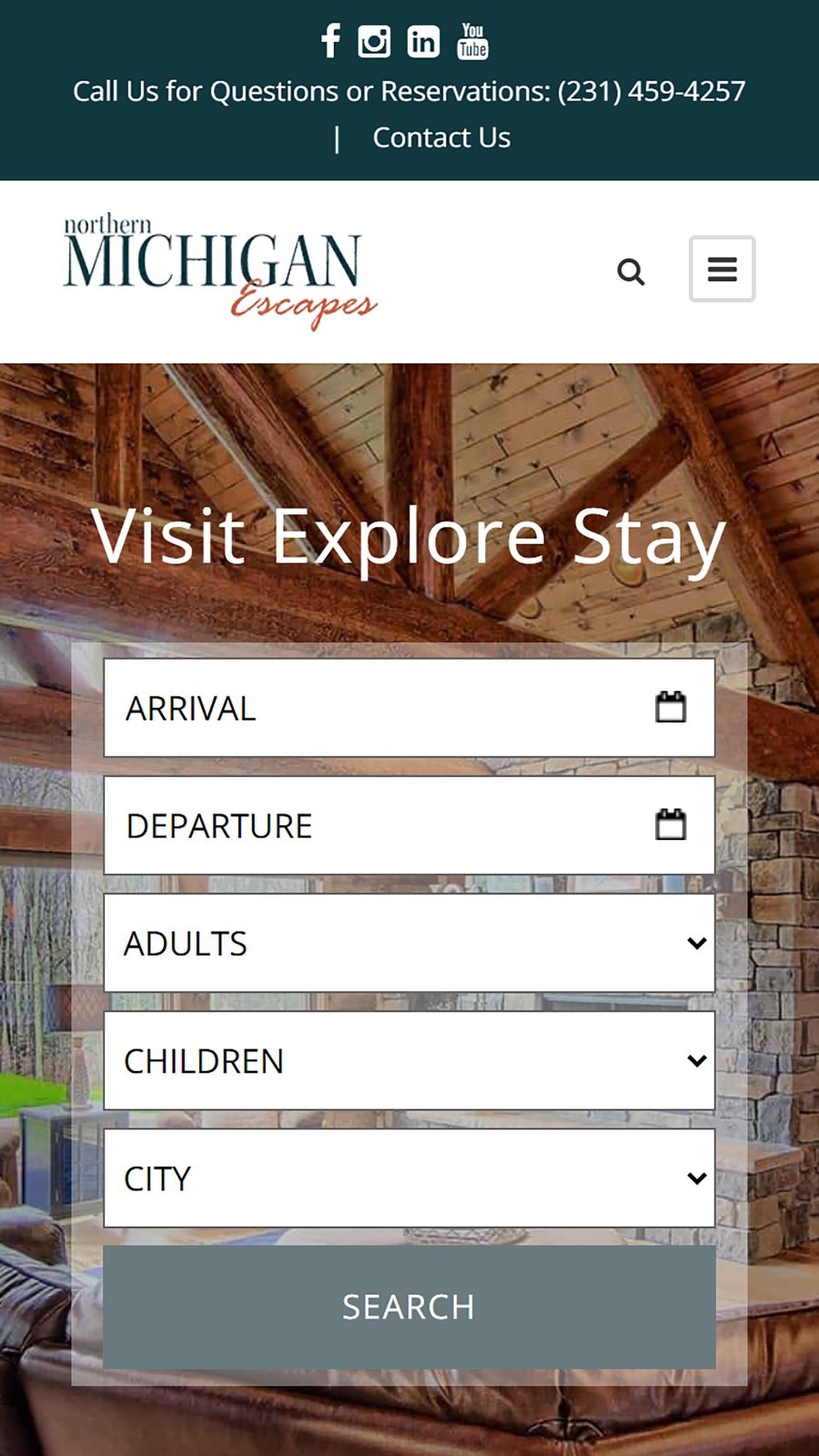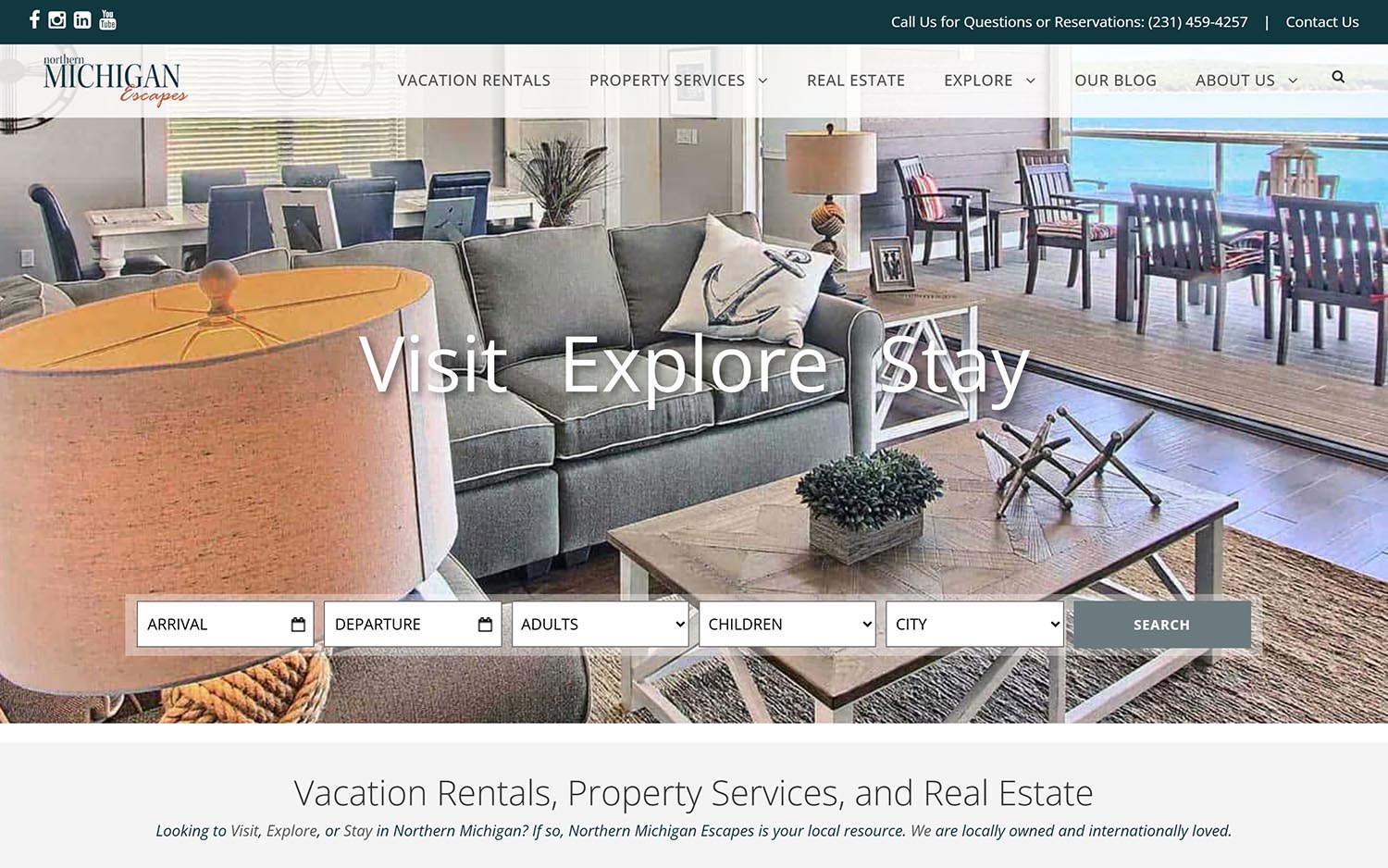

Northern Michigan Escapes manages and rents vacation property across the top of the state — Boyne City, Boyne Mountain, Charlevoix, Lake Charlevoix, East Jordan, Petoskey, Harbor Springs, Bay Harbor, Walloon Lake, and out toward Traverse City. Private homes, condominiums, and condo-hotels, plus association management and a real estate arm.
They also run the services around the stay: concierge, grocery delivery, babysitting, snow removal, lawn care, landscaping, interior design and remodeling, and weddings. It is a hospitality business, a property management business, and a brokerage stacked on top of each other.
Guests do not care about any of that. They care whether the house has a hot tub and whether it’s free in July.
Vacation rental companies run on specialist reservation platforms. Those platforms hold the inventory, the calendars, the rates, the availability rules, and the checkout — and they render their own pages, with their own markup, in their own house style.
Which creates the problem this project is really about. A guest browses a beautifully designed site, clicks Book, and lands somewhere that looks like a different company entirely. Different type, different spacing, different navigation, sometimes a different logo. The most important page in the entire funnel is the one page the designer doesn’t control.
And this wasn’t one site. It was the parent company plus a set of condotel properties, each with its own identity, each drawing from the same booking layer.
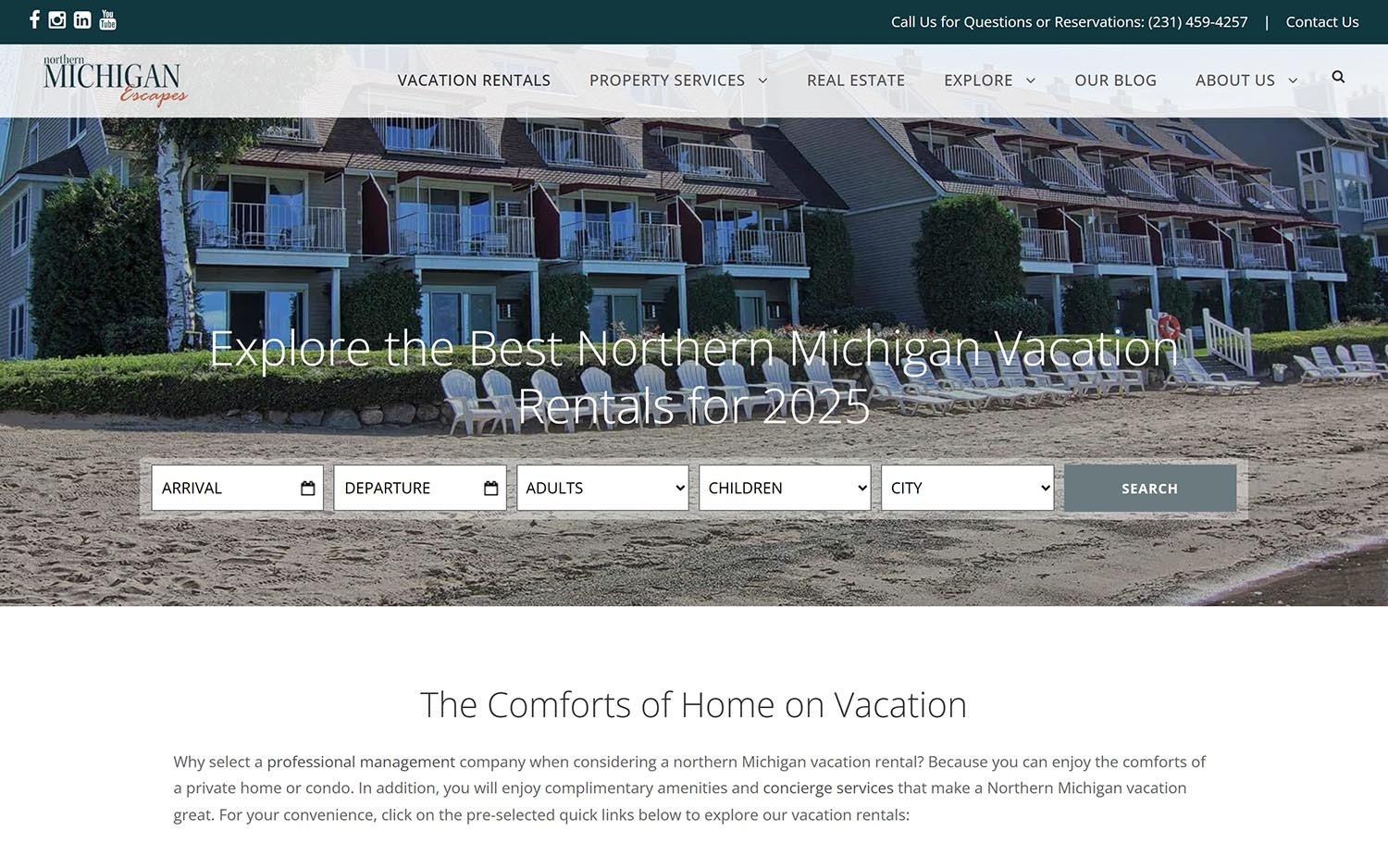
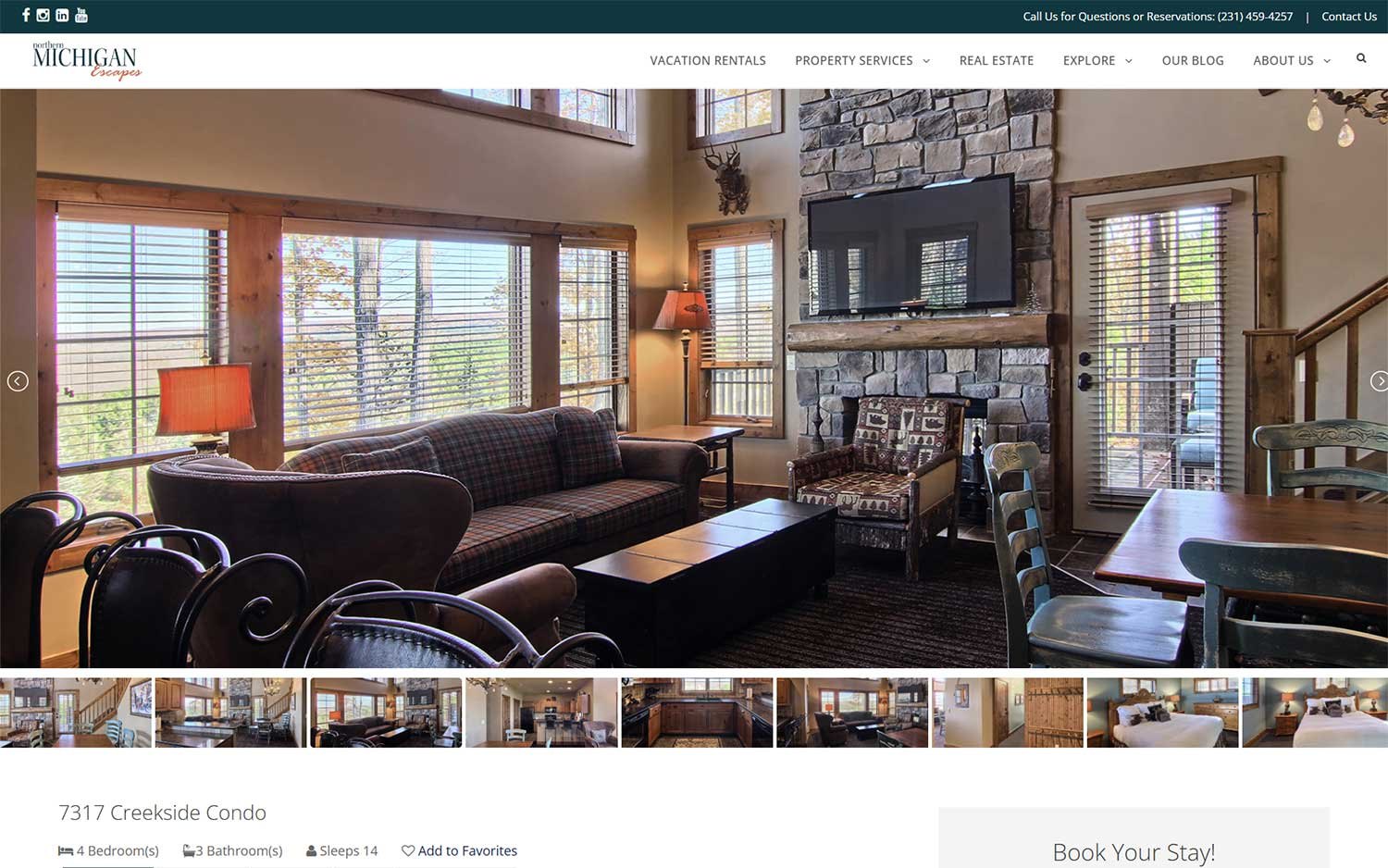
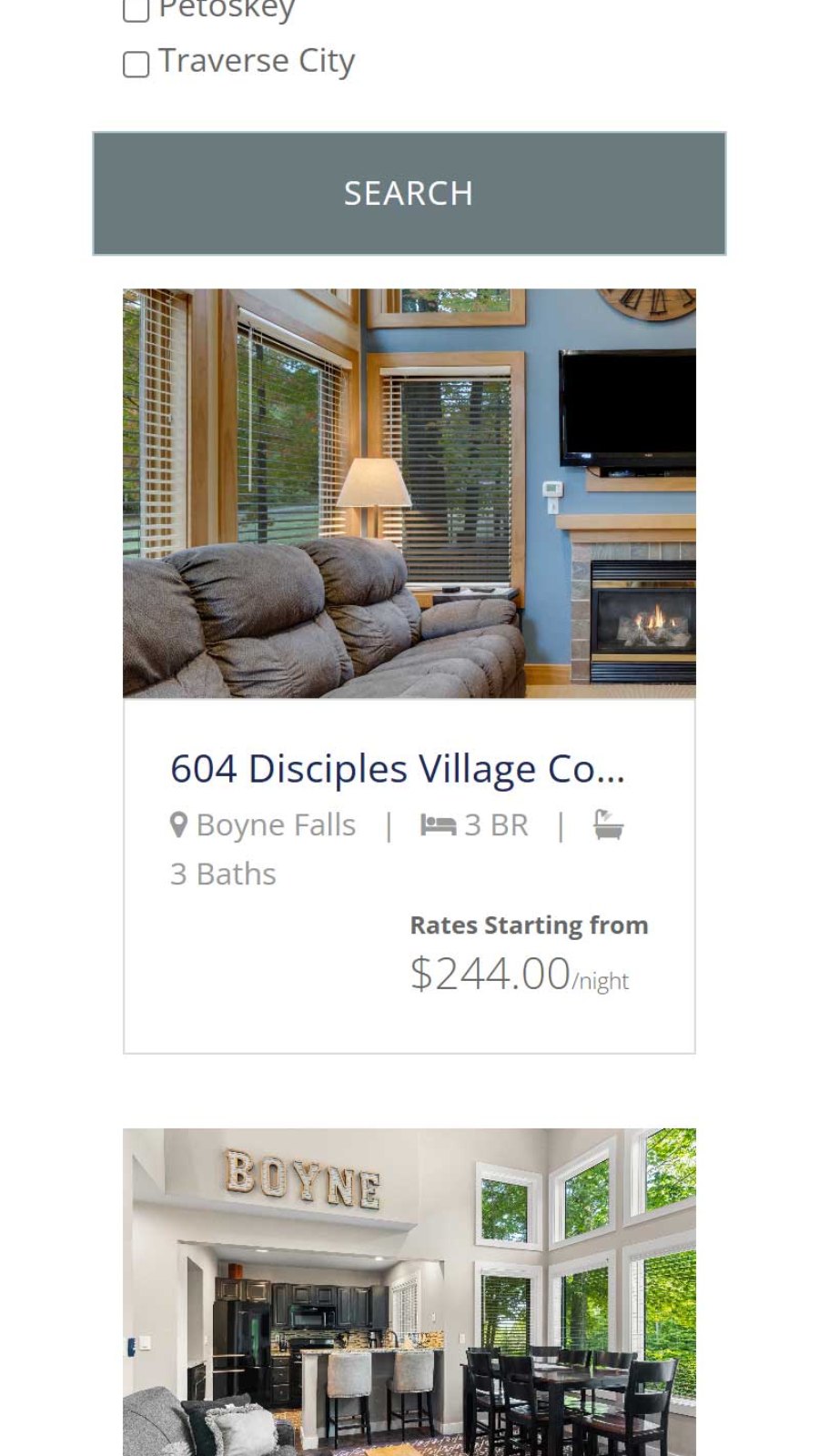
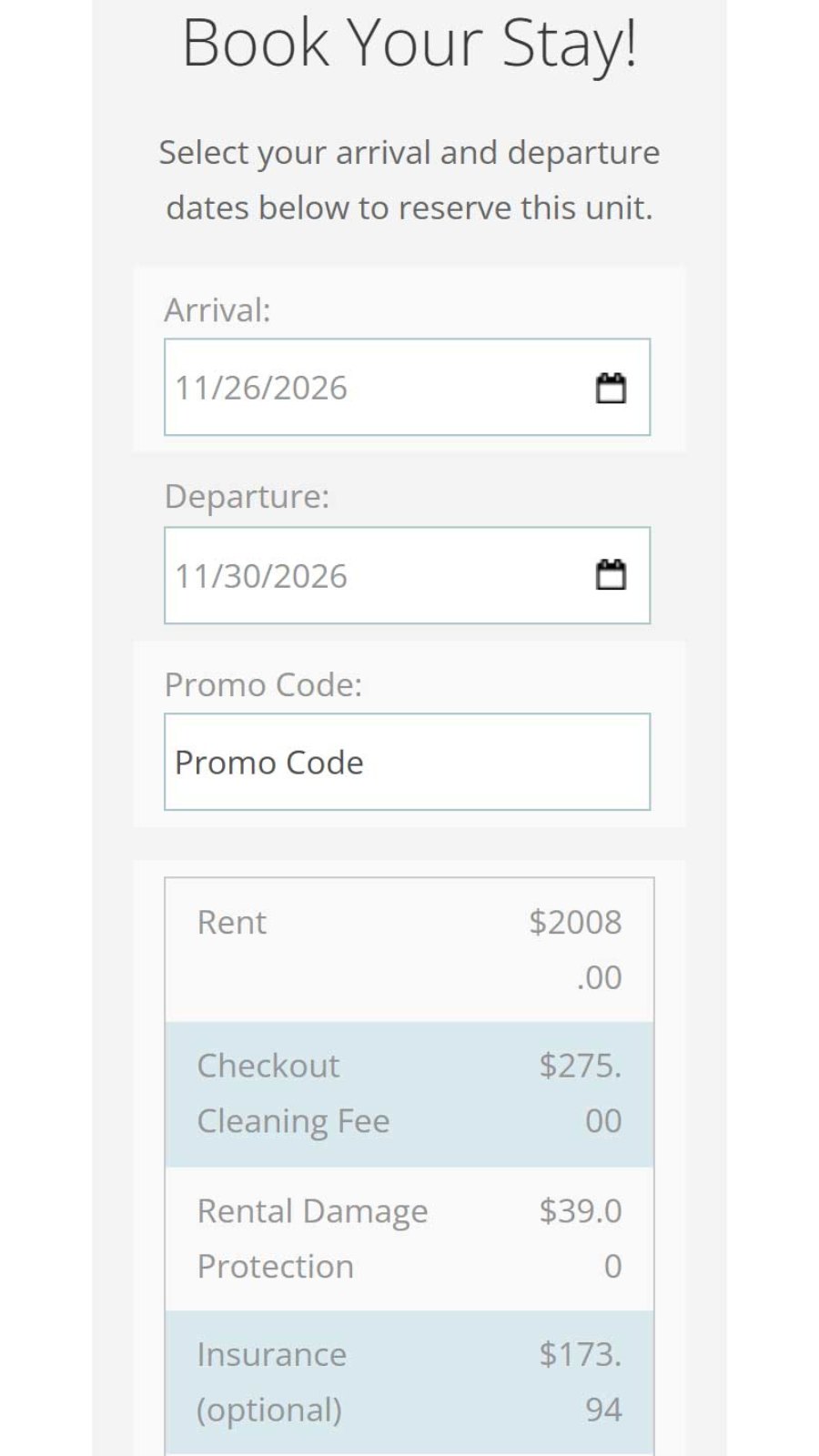
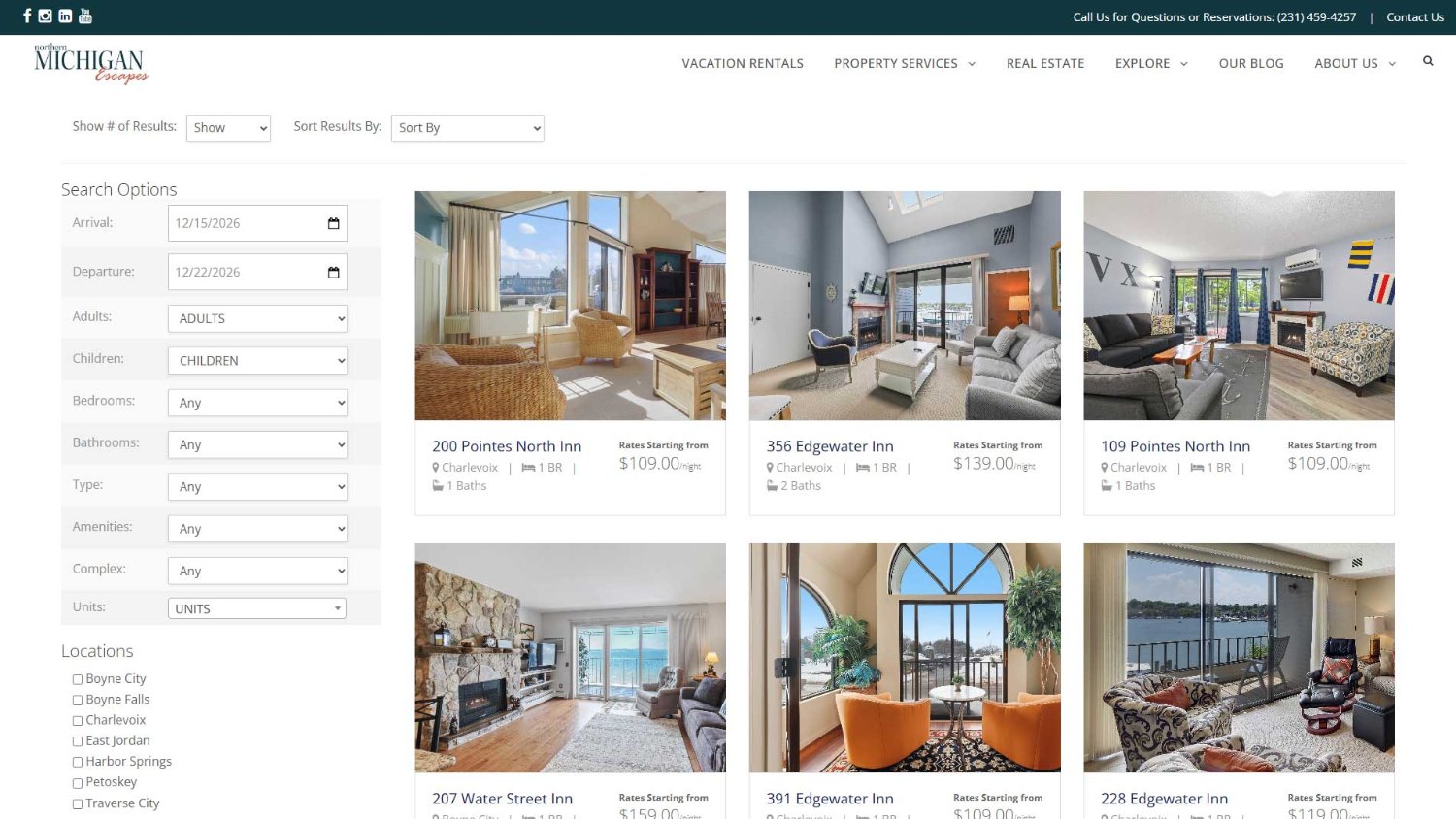
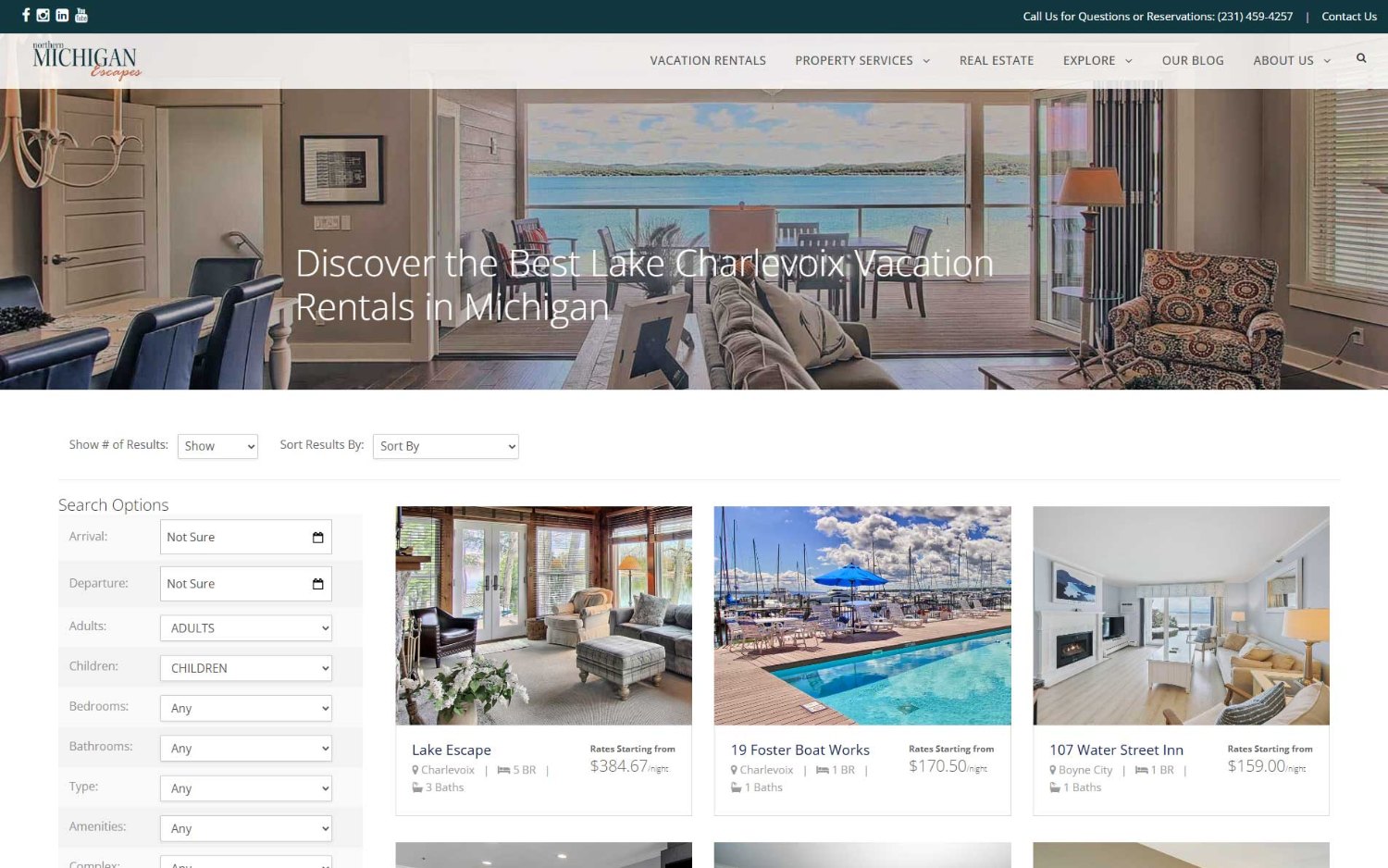
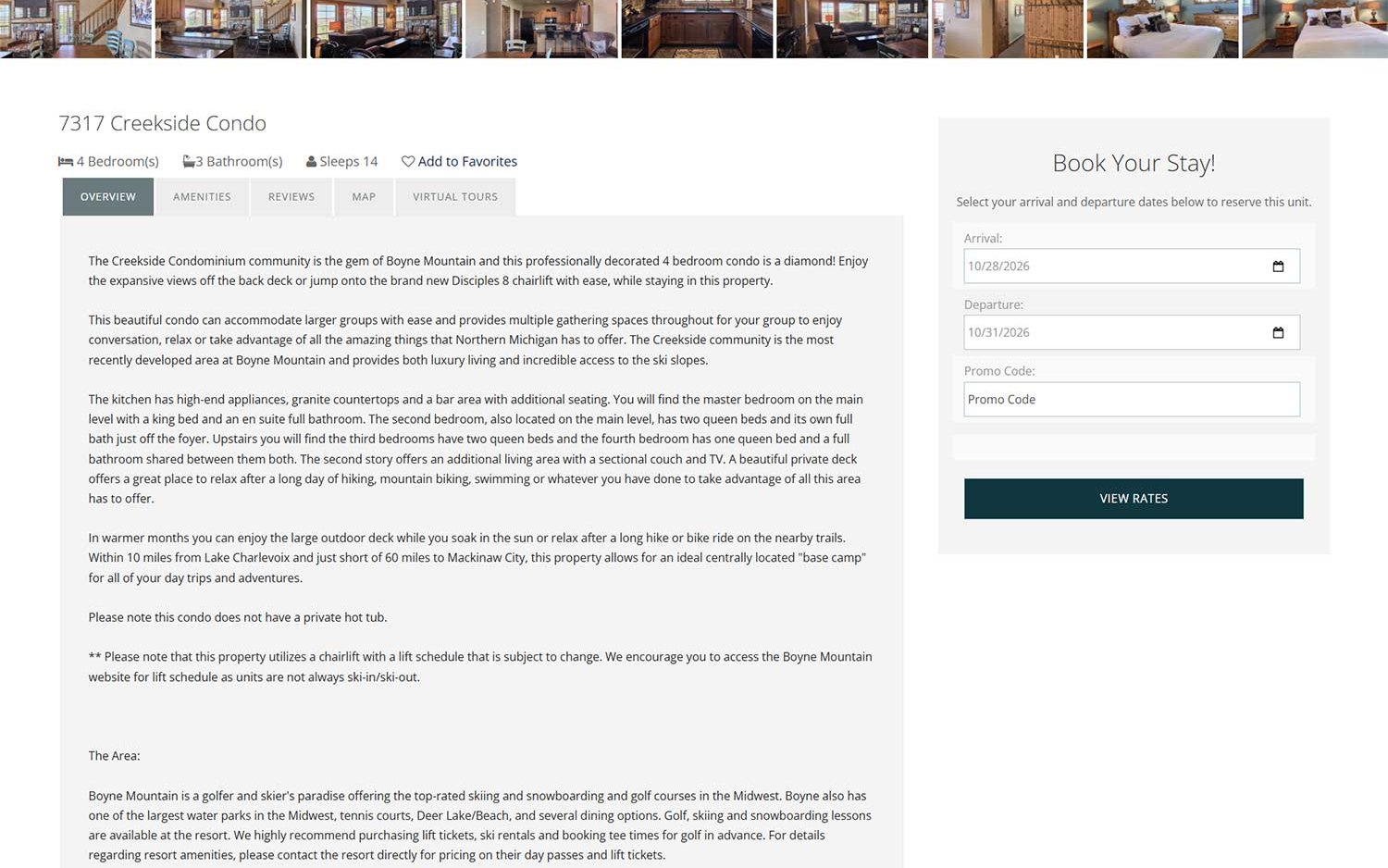
Rather than accept the seam, we rebuilt the booking layer’s presentation ourselves. We hand-coded HTML templates and loaded them into the WordPress back end so the rental platform’s pages — search results, property listings, individual unit pages, the booking flow — render in the site’s own design system rather than the platform’s.
This is unglamorous work and there is no shortcut through it. Every template gets built by hand against markup you did not write and cannot restructure, styled to match a design the platform has never heard of, and tested against live inventory. Do it properly and nobody notices anything at all, which is the point: a guest moves from browsing to booking without ever feeling the handoff.
The booking experience stays on the company’s own domain from search through reservation. Guests can filter for what they actually want — ski-in ski-out, pet friendly, private hot tub — and book private homes and condotel units through the same flow.
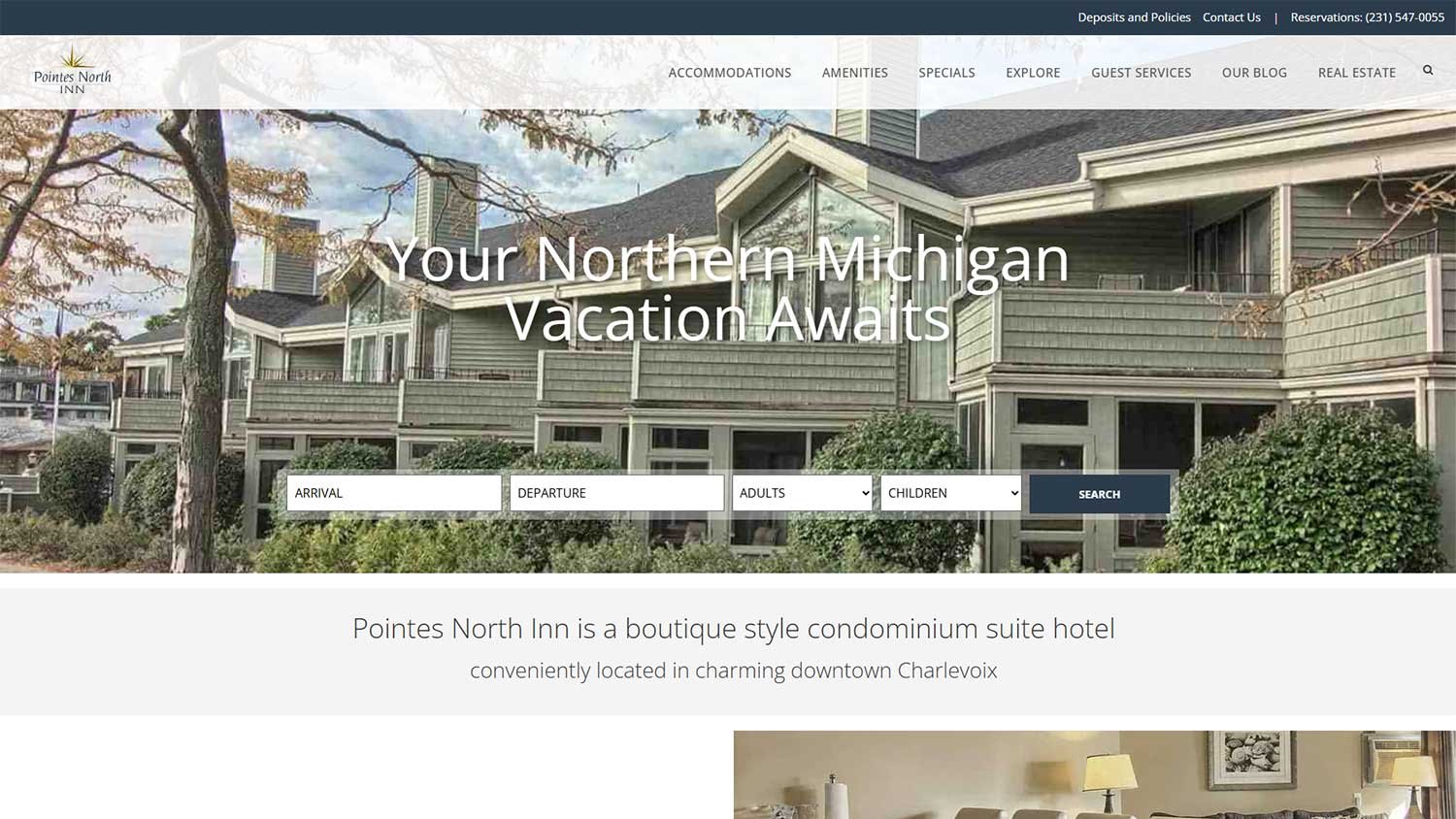
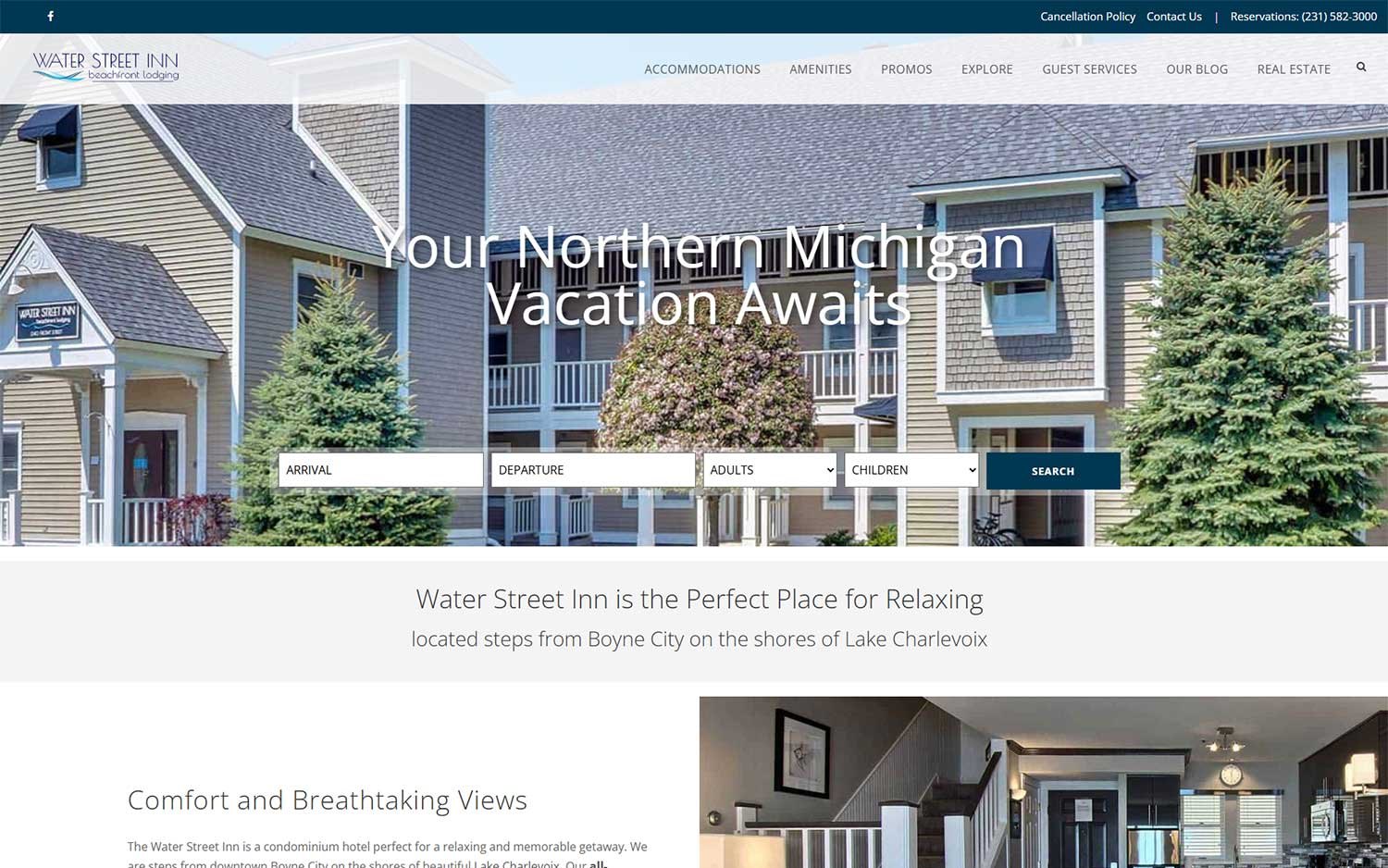
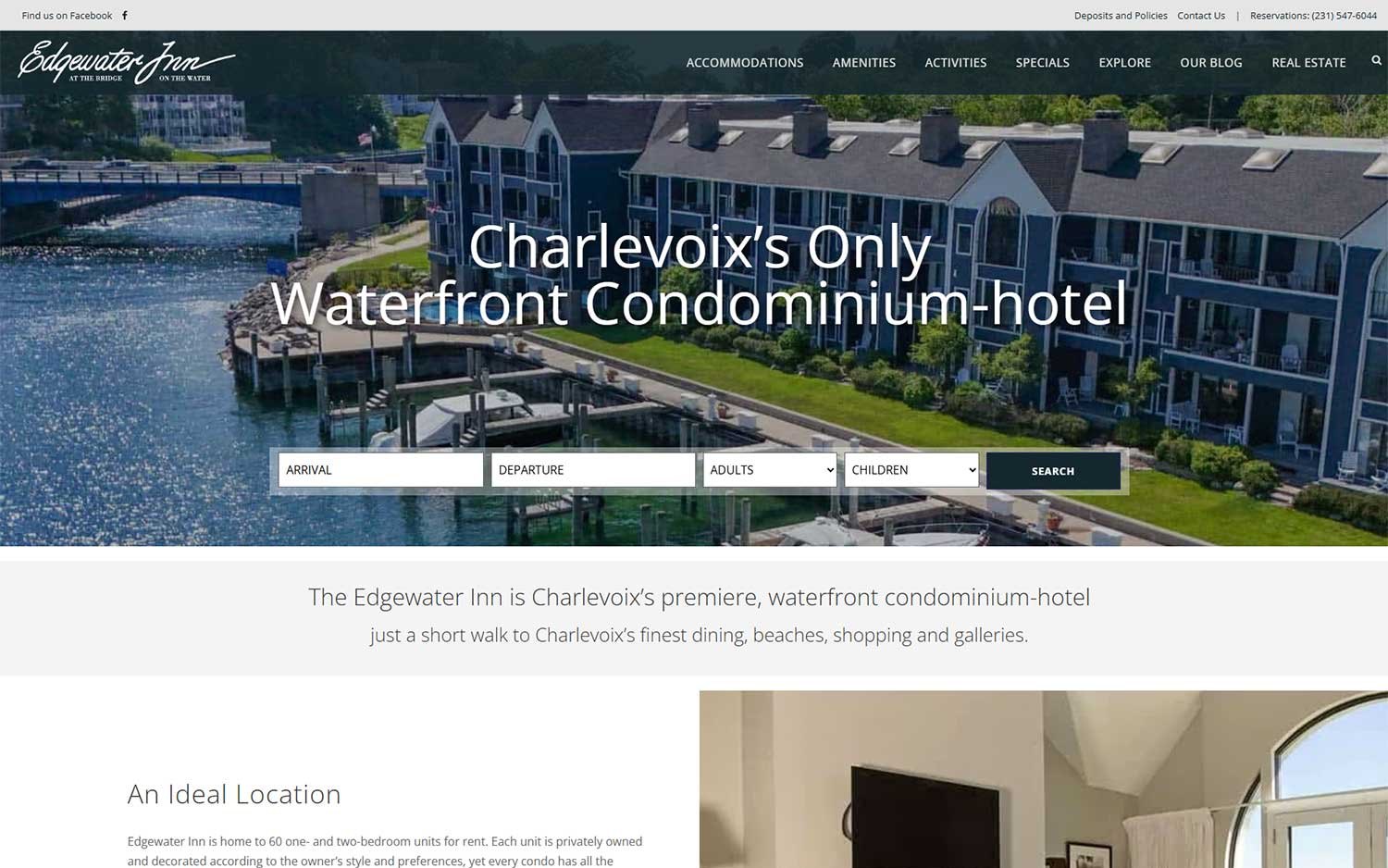
Several condotel properties operate under the Northern Michigan Escapes management umbrella, and each one is a business a guest books directly — Pointes North Inn and the Edgewater Inn in Charlevoix, the Water Street Inn in Boyne City, and the North Shore Inn.
We built each of them its own website in the same design language, with the same integrated booking layer underneath. Each property keeps its own name, its own photography, and its own sense of place — a boutique inn on Michigan Avenue is not an all-suite hotel on Front Street — while sharing the infrastructure, the templates, and the maintenance burden with the parent company.
The practical payoff is that improvements compound. Work done once on the booking templates improves every property at the same time, instead of being repeated five ways.
Managing property across ten towns means a distributed team — cleaners, maintenance, concierge, grounds crews — who need information the public site has no business showing.
So we built a custom employee portal into the site: a private, authenticated area where staff get what they need without a second system to log into and without anything leaking onto the guest-facing pages.
It is the least visible thing we built here and one of the most used. That is usually how it goes with operational tooling.