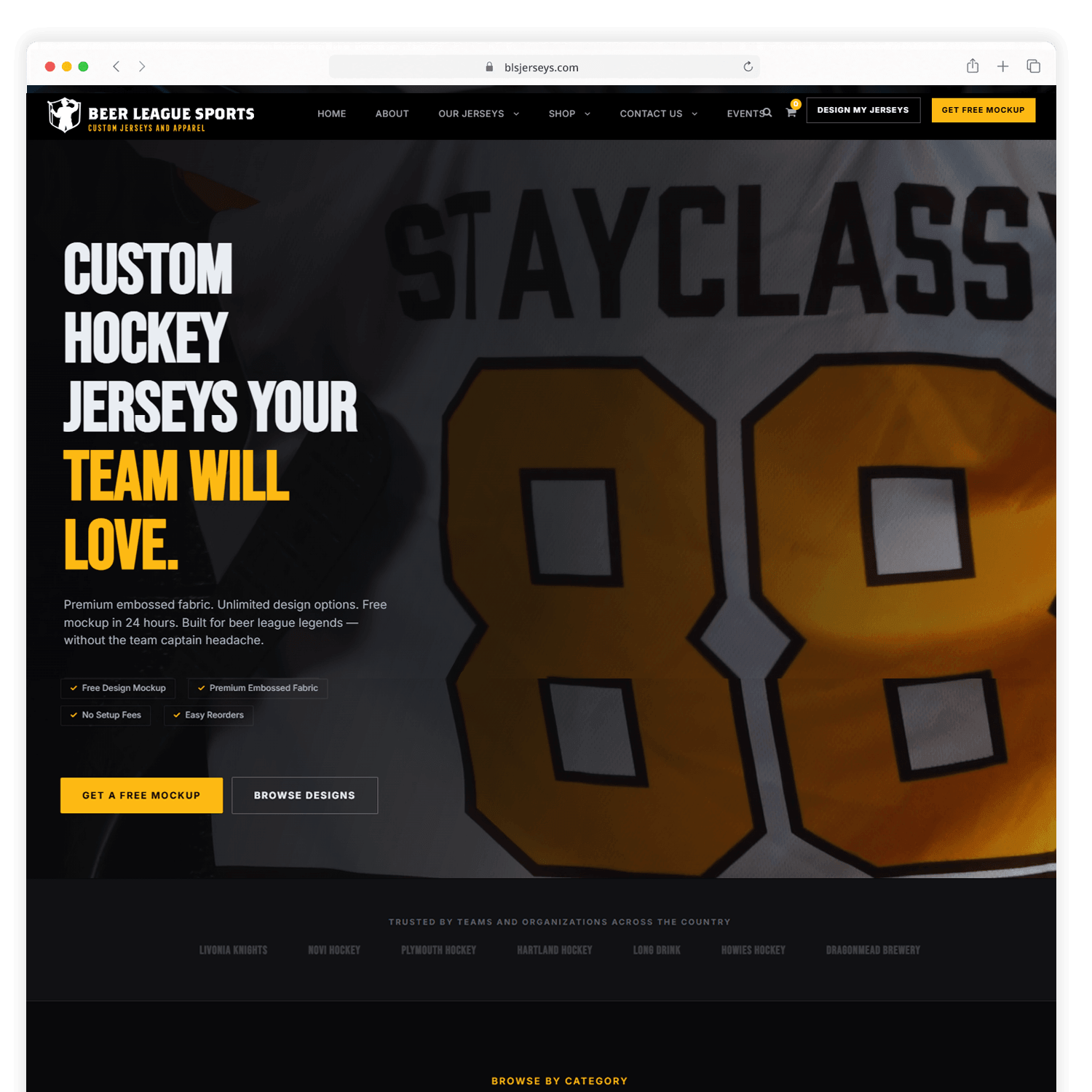

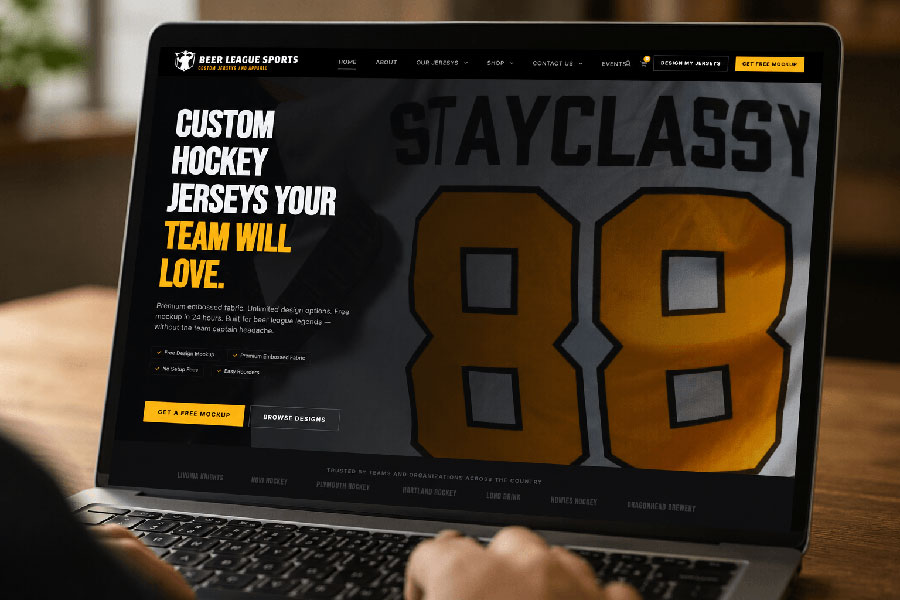
Beer League Sports makes custom jerseys and apparel for teams and organizations. A team comes to them with a name, a logo, and an idea, and leaves with a design of its own — its own colors, its own neck style, its own roster.
That roster can arrive two different ways. Players can each order and pay for their own jersey, or a team captain can place one order for everyone. Both are how real teams work, and both had to keep working.
A custom order is a long relay. An inquiry comes in. A designer makes a mockup. The customer approves it. Someone builds a team store by hand. Players order. Then the details get handed to the vendor.
Each handoff was a place where work could wait or details could slip. An approved mockup sat until someone had time to build the store. Specifications were entered by hand, store by store. And because each team needed something slightly different, the site had collected forty separate order forms, most of them copies of one another with a different collar or sport.
Beer League Sports asked a simple question: how much of this could happen on its own?
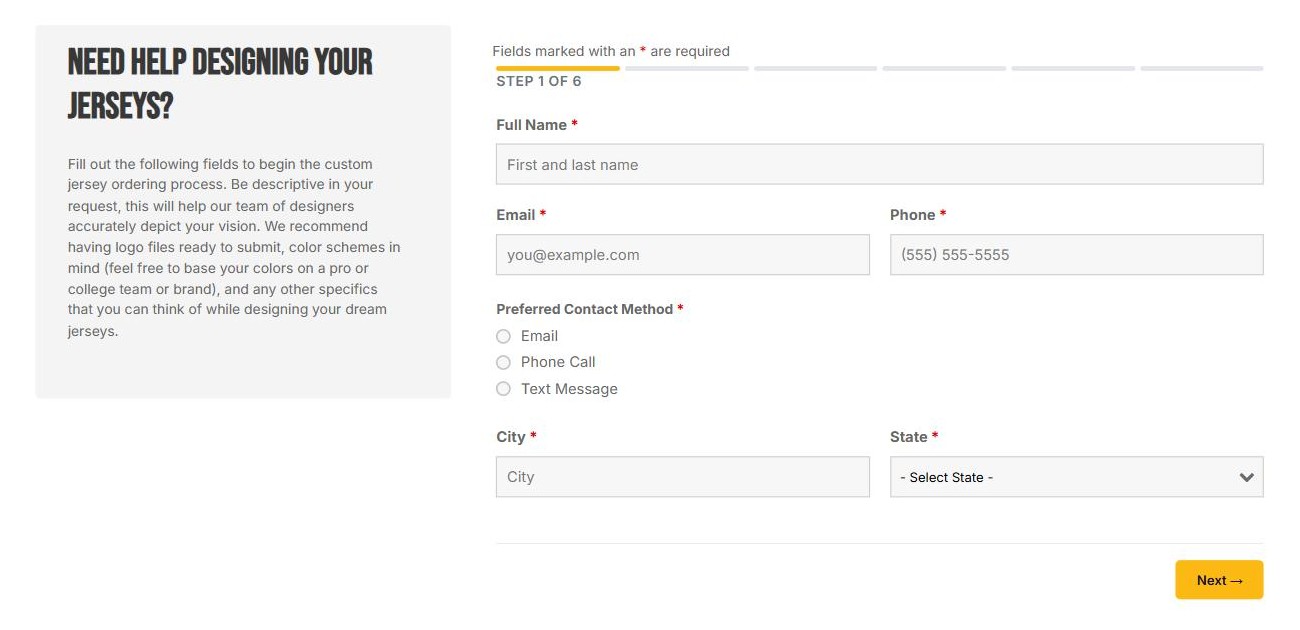
We built a custom plugin around a single idea: every job is one record, from the first inquiry to the final order. When a customer submits the consult form, the record creates itself, already holding everything they told us.
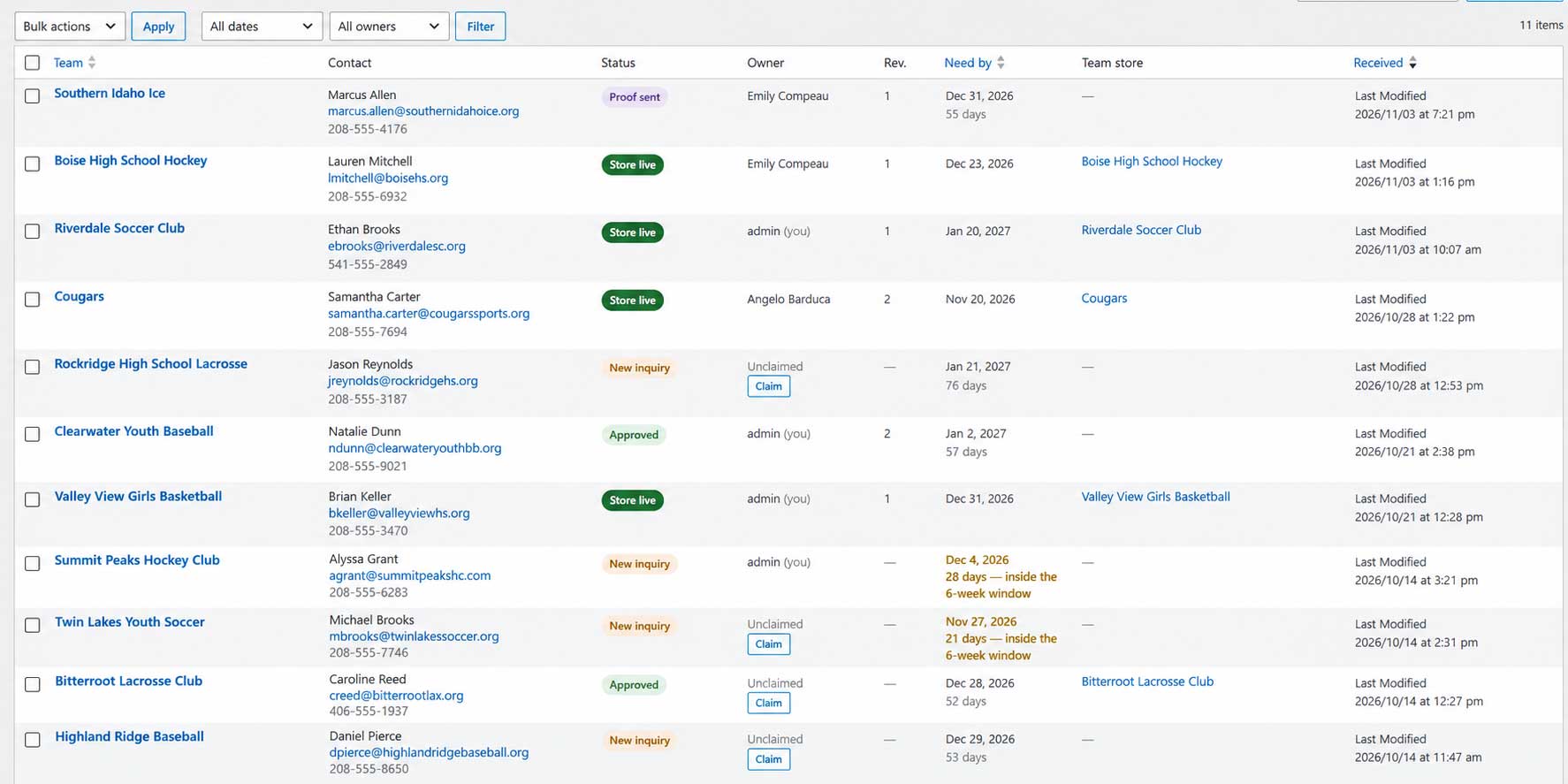
That record moves through seven stages, and the list of stages is the dashboard. Staff can see every incoming lead and where it stands, claim the ones that are theirs, and filter down to their own work. Nothing has to be tracked somewhere else.
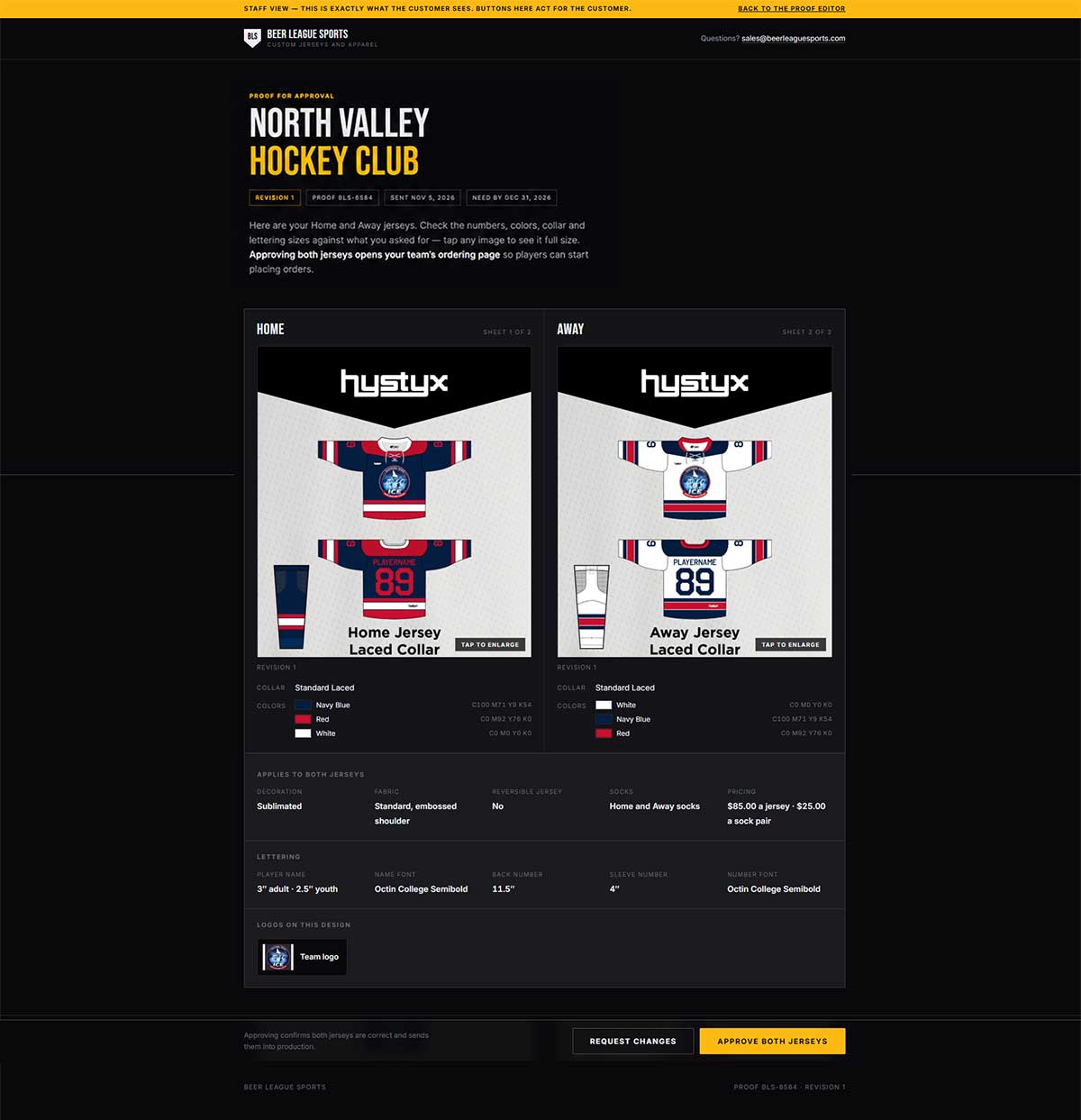
Every customer gets a private link to a proof page built in the Beer League Sports style. Home and Away mockups sit side by side and are approved together, with the colors, neck style, lettering, and logos spelled out next to them, so nobody is guessing at what they’re signing off on.
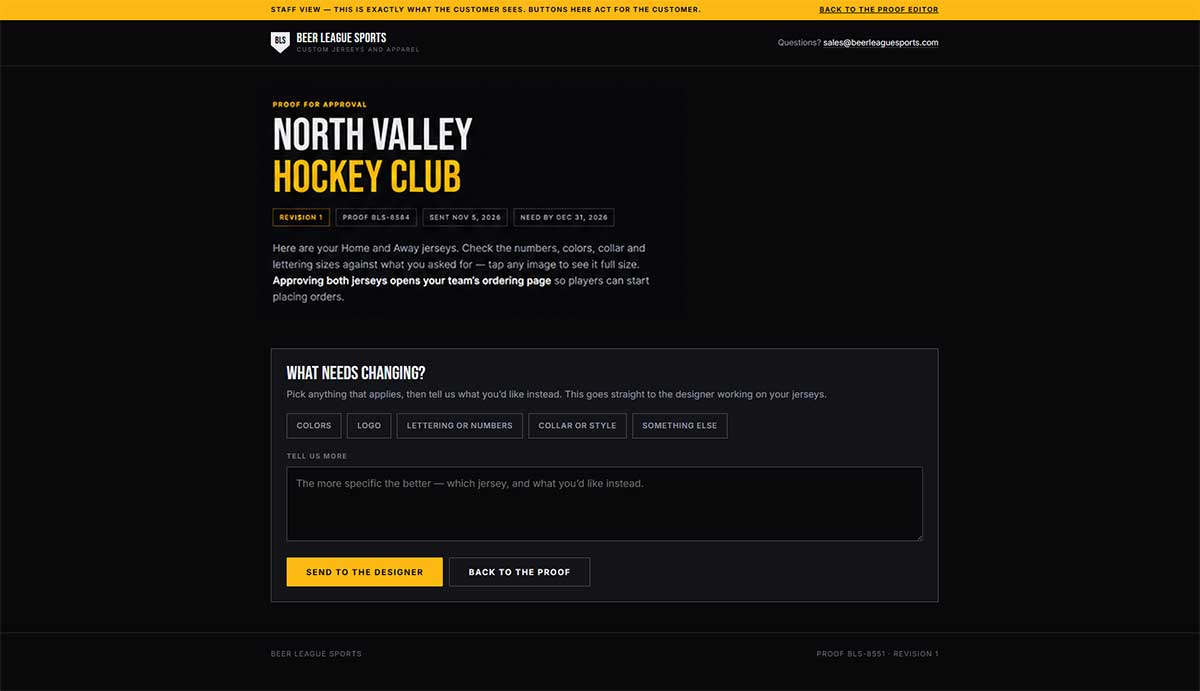
If something’s off, the customer asks for changes right there, choosing from quick picks like colors, logo, lettering, or collar and adding a note. The request goes straight to the designer working on the job. The new revision lands on the same link, so there’s never a question of which version is current.
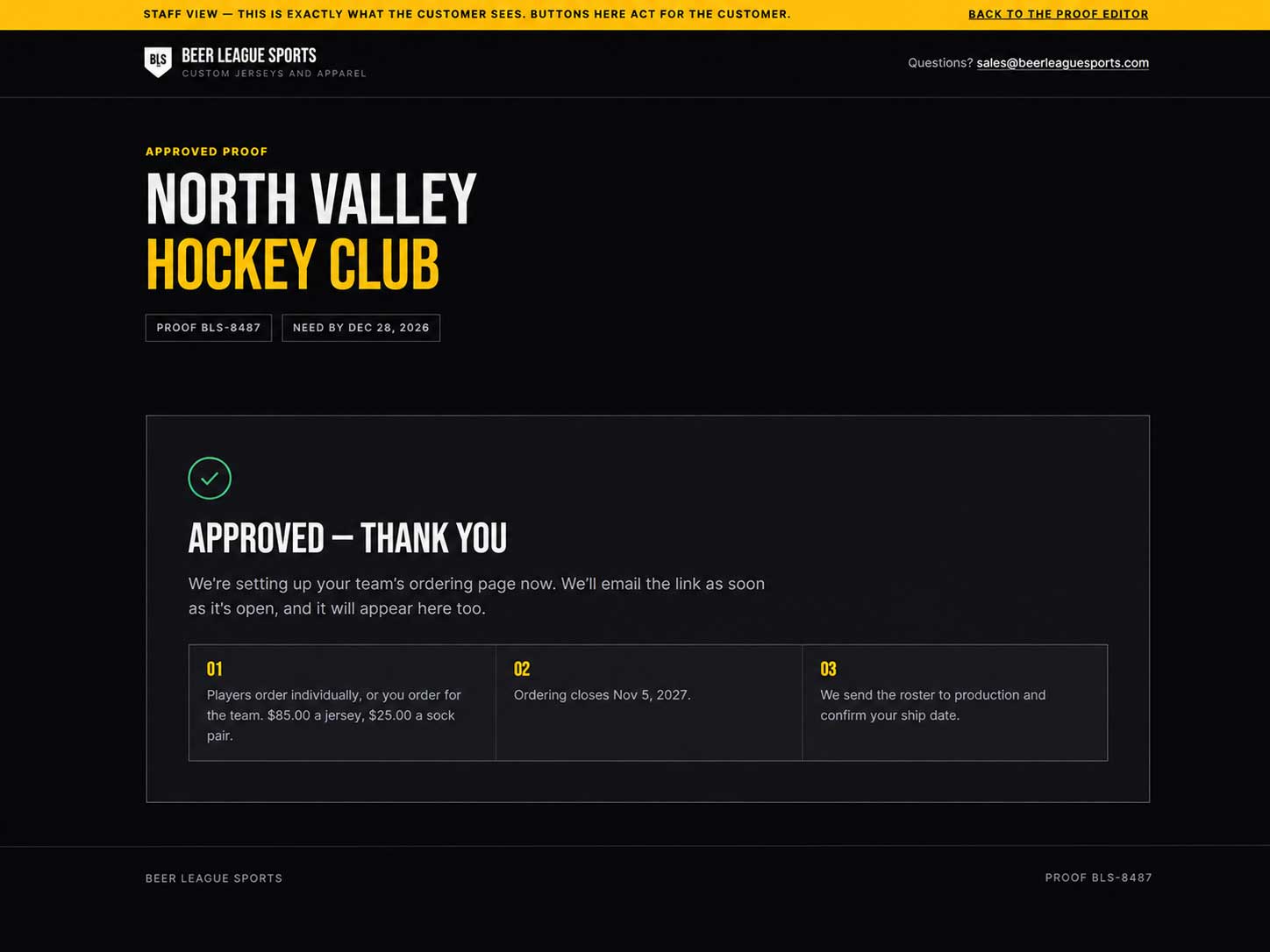
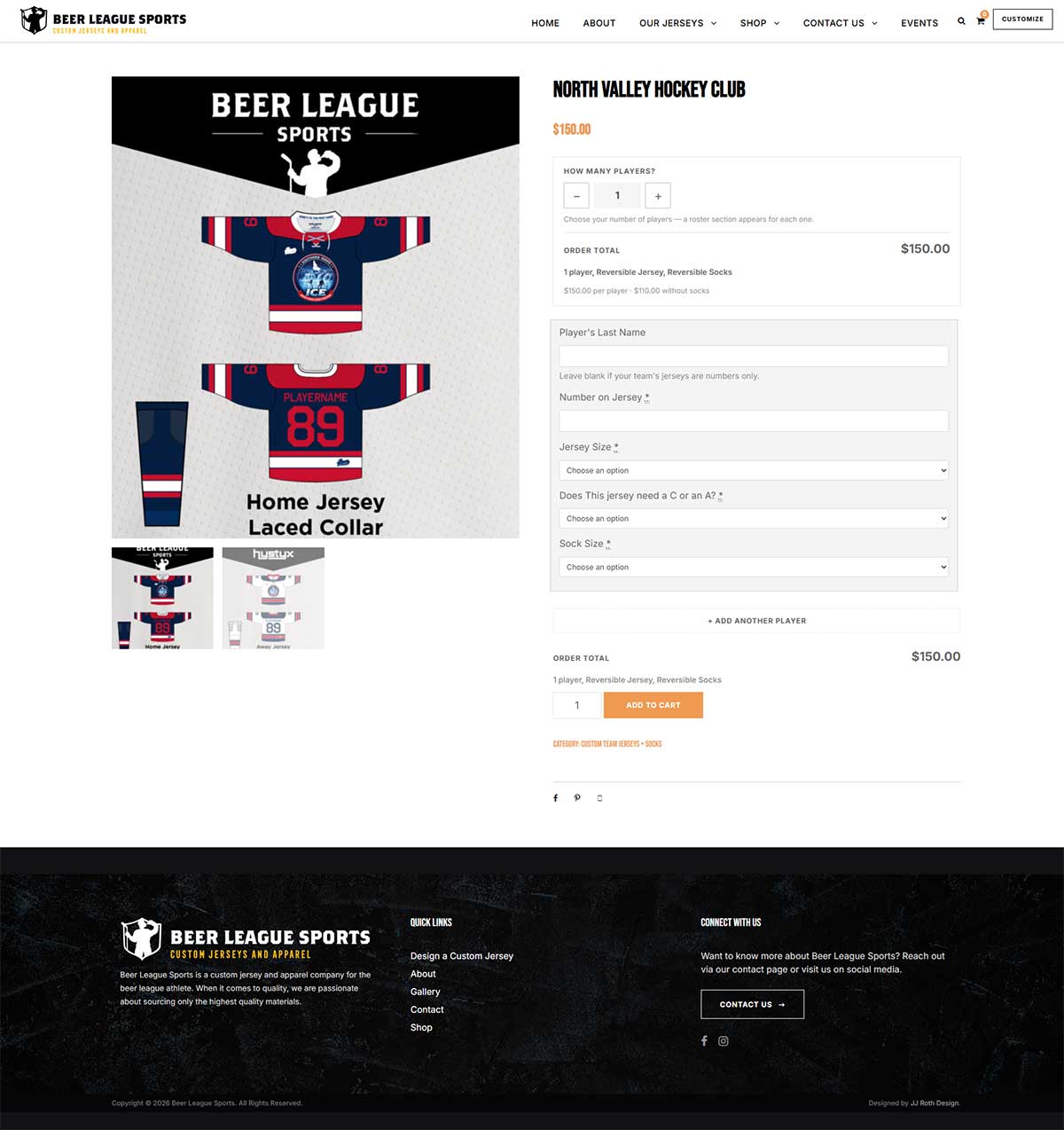
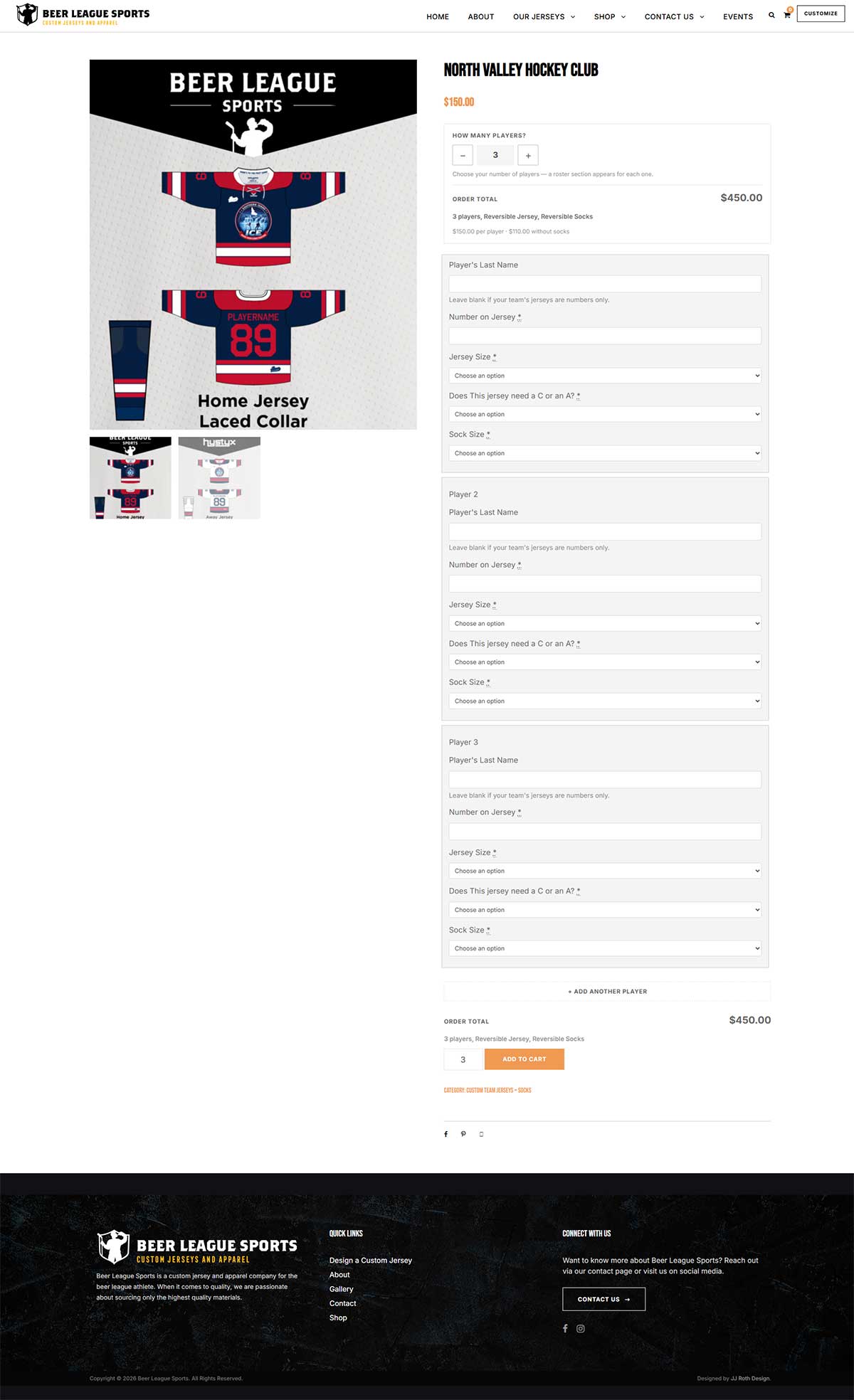
This is the step that used to wait. Now, as soon as a customer approves both jerseys, the system builds their team store from the approved proof. The specifications come straight from the proof, so what the customer agreed to is what the store sells. The customer sees what happens next right on the page, and the store link arrives by email and appears on their proof page as soon as it opens.
Stores are private and reached by link, and players choose their own sizes, names, and numbers. Both ordering modes still work: each player can buy their own jersey, or a captain can enter the whole roster at once.
The forty one-off forms gave way to two standard ones, which means every new store behaves the same way and there’s far less for staff to build or check.
The last handoff is where a small mistake gets expensive, so we rebuilt it around one rule: the file the customer approves is the file the vendor receives.
A team filter on the orders screen pulls a whole roster together in one click, and it produces the same production sheet whether that roster came from twenty separate orders or one captain’s order with twenty rows. The approved mockups are on it, along with every name, number, and size. Details follow the player, too: name height comes from the size each person ordered, not from the team as a whole.
When the job is ready, Send to Vendor puts it on the production Trello board with the tech sheets attached.
Beer League Sports couldn’t close for a rebuild, so we didn’t ask them to. The whole system ships as its own plugin, working alongside the live store. New projects use the new flow, and existing teams and their stores carry on exactly as they were.
The team now has one place to see every job, and a customer’s approval now builds their team store on its own. We’re still working alongside them, refining the system as they use it on real orders.